
Start With the Purpose of the Glass
Before choosing a film or printed graphic, decide what the glass must do. A front window at a retail shop in Bloemfontein may need to advertise trading hours and promotions. An office partition in Mangaung may need privacy without blocking daylight. A clinic, salon or school may need a cleaner look with controlled visibility. The right answer starts with the use of the space, not just the artwork.
Good window graphics usually fall into three groups: branding, privacy and promotion. Branding uses logos, opening times and core messages. Privacy uses frosted or patterned film to reduce direct sight lines. Promotion uses full colour graphics, seasonal offers and product images. Many sites need a mix of all three, especially where the street facing glass is large and the interior sits close to the pavement. That mixed approach is often the best use of the glass.
We begin with a site survey where needed, then check the glass size, frame lines, tinting, existing film and sun direction. In the Free State, strong afternoon light can make some films look lighter from inside than expected. That matters when you want a private area but still need enough daylight for staff and customers.
Choose the Right Film for the Job
Window graphics are not all the same. The material should match the location, the viewing distance and how long the message must stay up. A short term sale banner on glass can use a removable printed film. A long term privacy solution may need frosted vinyl cut to size. A branded entrance with fine lettering needs a film that can hold detail cleanly and stay readable from the street.
For busy glass areas, consider how the message reads from outside, from inside and at an angle. A person walking past on a sidewalk sees something different to a driver at the robot. In a windy or dusty area, like certain parts of Mangaung or Botshabelo, the finish must also handle dirt and cleaning without lifting at the edges. At coastal sites humidity is the issue, but here dust, heat and sun are usually the bigger concern.
- Clear film: for printed branding where the glass should still show through.
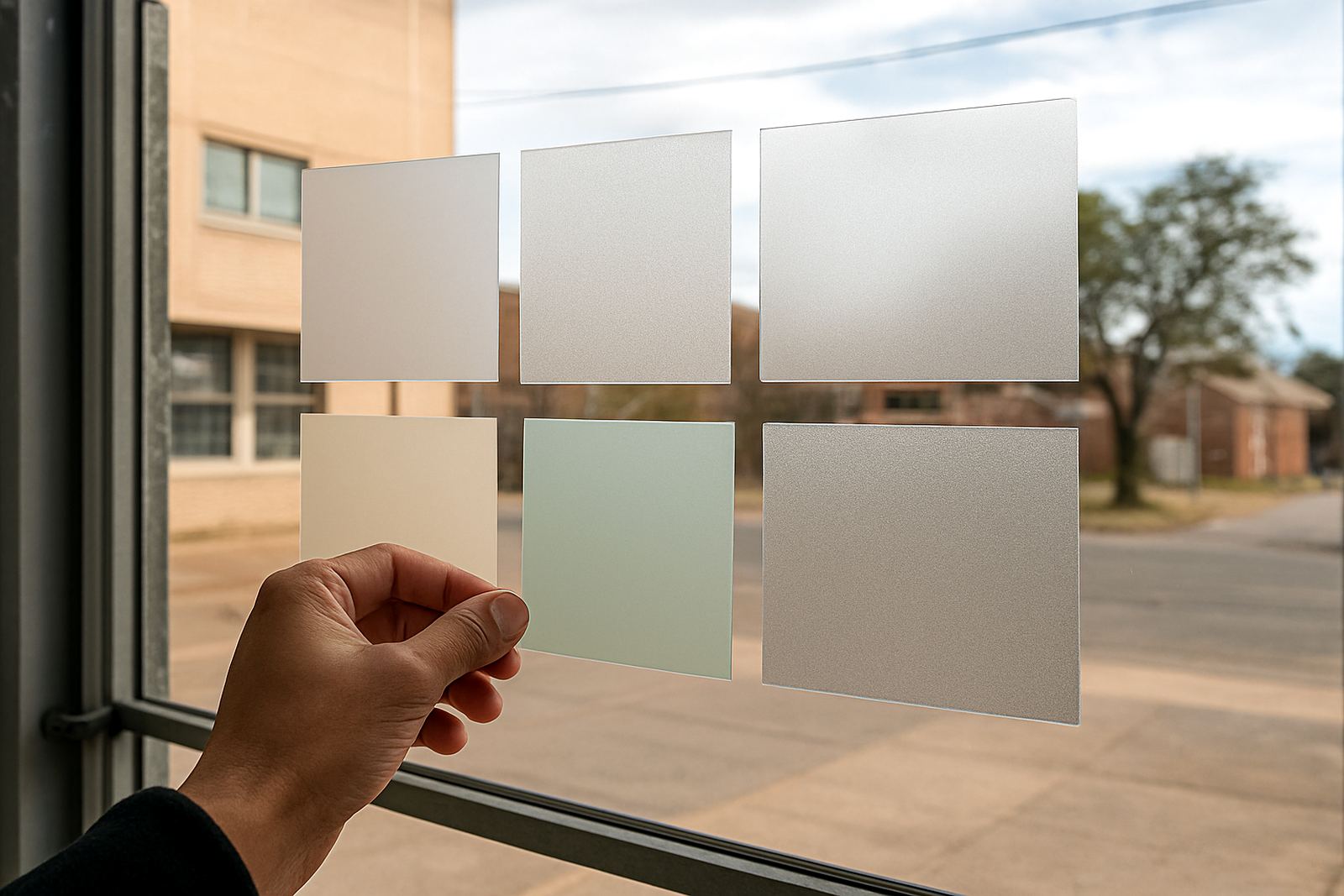
- Frosted film: for privacy, meeting rooms and reception areas.
- Perforated film: for external graphics that allow some outward visibility.
- Cut vinyl: for logos, hours, wayfinding and simple text.
- Laminated print: for longer life and better cleaning resistance.
Ask how the graphic will be maintained too. Some films are easy to wipe down, while others need more care. If the glass is part of a high traffic entrance, maintenance should be simple and predictable.
Plan the Artwork So It Fits the Window
Good glass graphics are measured to the millimetre. Window frames, handles, muntins, security bars and opening panels all affect the final layout. If artwork is planned only as a flat rectangle it can land on a handle or be broken by a frame line. That looks untidy and can also make the message hard to read. We map the glass first, then set the artwork around the physical features.
For shopfronts, keep the main message where people naturally look. Put the logo at eye level and keep the smallest text large enough to read from the correct distance. For offices, use the lower band of glass for privacy and leave the upper section lighter if you still want daylight. For doors, avoid placing vital text where it can be blocked by the opening side or obscured by security stickers.
Artwork setup also matters for colour and line thickness. Fine type can disappear on tinted or reflective glass. Pale colours may fade visually in bright sun. Bold contrast works better for most street level sites. Zanele often recommends a simple layout first, then adds detail only where it will still read clearly. That keeps the window from becoming cluttered and hard to follow.
Installation Details That Make the Difference
Clean glass is the foundation of a proper installation. Dust, glue residue, silicone and old film can all prevent adhesion. A good installer will check the surface, remove loose contamination and confirm that the glass is suitable for the chosen material. Tempered glass, laminated glass and tinted panels may each need a slightly different approach.
Install timing matters as well. Load-shedding can affect a busy site if internal lighting is needed for alignment or if the space is still being fitted out. Heat and direct sun can make film harder to position, so early morning work is often best for large street facing windows. At Hamilton in Bloemfontein, many clients ask for work outside trading hours so the shop can open cleanly the next day.
- Confirm glass measurements and panel divisions before printing.
- Check for cracks, chips, old adhesive and loose sealant.
- Agree on access, working hours and any parking or security rules.
- Allow for curing time before cleaning or heavy handling.
- Test visibility, legibility and appearance from outside and inside.
Once installed, the edges should sit flat and the finish should look even across every panel. If a door or panel moves frequently, the graphic must be placed where it can flex without peeling. A rushed fit can look fine on day one and fail early, so installation skill really matters.
How Window Graphics Help With Privacy and Safety
Glass can be a privacy problem when meetings, treatment areas or stock rooms sit close to public space. Frosted film gives a soft, professional finish without turning the room into a dark box. In many offices and medical rooms, a frosted band or full panel treatment is enough to stop direct sight lines while still leaving the area bright.
Safety also improves when glass is marked clearly. Doors, partitions and large panes should be visible enough to reduce collisions. This is especially useful in busy retail sites, schools and reception areas where people move quickly and may not notice plain glass. In some cases, simple line work or a printed band can prevent accidents and still keep the space looking tidy.
For businesses that need privacy during parts of the day only, temporary graphics can be used on selected panels. That helps with launches, stock counts, special events or short term service changes. A clean debranding or removal service is also useful when the message changes and the glass must return to plain condition without damage.
A Simple Checklist Before You Order
A clear checklist saves time and keeps the result aligned with the site. It also helps the designer, fabricator and installer work from the same information from the start. This is especially useful when the job includes multiple windows across different branches in Bloemfontein, Mangaung, Botshabelo, Thaba Nchu, Welkom or Kroonstad.
- What is the main goal: branding, privacy, promotion or all three?
- Which windows will be covered, and which must stay clear?
- Do you need full coverage, a lower band, or individual cut lettering?
- Will the graphic be viewed mostly from outside, inside, or both?
- How long must it last, and does it need easy removal later?
- Are there security bars, handles, tinting or frames that affect placement?
- Will the window need regular cleaning or maintenance visits?
If you can answer those points upfront, the final result is usually cleaner and more practical. It also reduces rework and extra cost later.
Keep the Glass Looking Good After Installation
Once a window graphic is in place, care is straightforward if the material is chosen well. Avoid harsh abrasives and strong chemicals on printed surfaces. Use a soft cloth and a mild cleaner, then wipe gently. That helps preserve the print and keeps the edges from lifting. On sun exposed glass, regular checking is sensible because heat can expose weak corners over time.
Maintenance visits are useful for shops that change promotions often or for sites where graphics need small repairs after cleaning or building work. If the message changes every few months, plan for easy updates from the start. That way the glass remains useful rather than becoming cluttered with old layers and half removed film. A well maintained window can carry a business image for years, not just a season.
Central Signs works from Hamilton in Bloemfontein and supports glass graphics across the surrounding towns and service areas. We handle site surveys, artwork setup, print production, vinyl cutting, graphic lamination, fabrication and installation so the job stays consistent from start to finish.