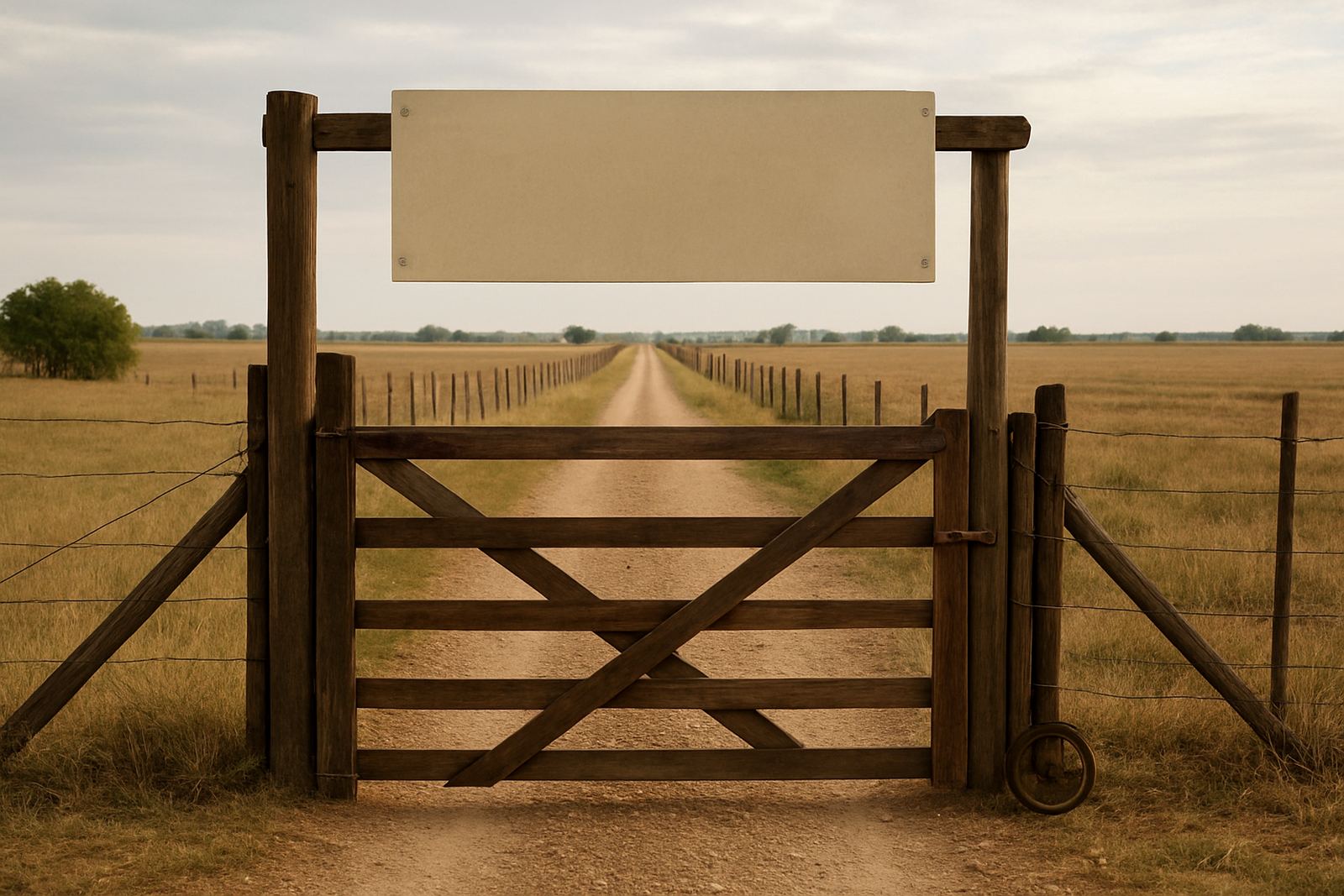
Brief for a farm entrance that had to be seen from the road
The client needed a proper roadside marker for an agricultural property outside Thaba Nchu, plus directional boards to guide visitors from the main access point to the office area, sheds and loading yard. The old signage had faded badly and could not be read quickly by drivers coming in from the district road. In this part of the Free State, that matters because vehicles often approach in bright daylight, with dust in the air and very little time to turn safely.
We started with a site survey from our Bloemfontein base in Hamilton and checked the approach angles, setback from the road, pole positions and the most practical mounting height. The owner also wanted the sign to work for contractors, delivery drivers and seasonal staff who may not know the property well. We kept the layout clean, large and direct, with only the information needed at driving speed.
- Client type: agricultural property near Thaba Nchu
- Signage type: roadside entrance sign plus directional boards
- Main need: quick identification from the road and easy on-site wayfinding
- Environment: sun, dust, wind and load-shedding related lighting gaps
What made the site more difficult than a normal sign job
The main challenge was exposure. Farm roads around Thaba Nchu can carry dust and fine grit, so the sign face had to hold up well without losing contrast after a few weeks. There was also limited room at the entrance, which meant the boards had to fit the available verge without blocking turning vehicles or creating a hazard for farm traffic.
We also had to consider local visibility during early morning and late afternoon when the light changes fast. For that reason, the artwork used strong colour contrast and a simple hierarchy: the property name first, then directional information beneath it. No extra clutter, no small text that would disappear when a bakkie was moving past at speed.
- Limited verge space for safe mounting
- High dust exposure on the access road
- Need for fast readability from a moving vehicle
- Durable finish for strong sun and seasonal weather shifts
Materials and sign construction for long service life
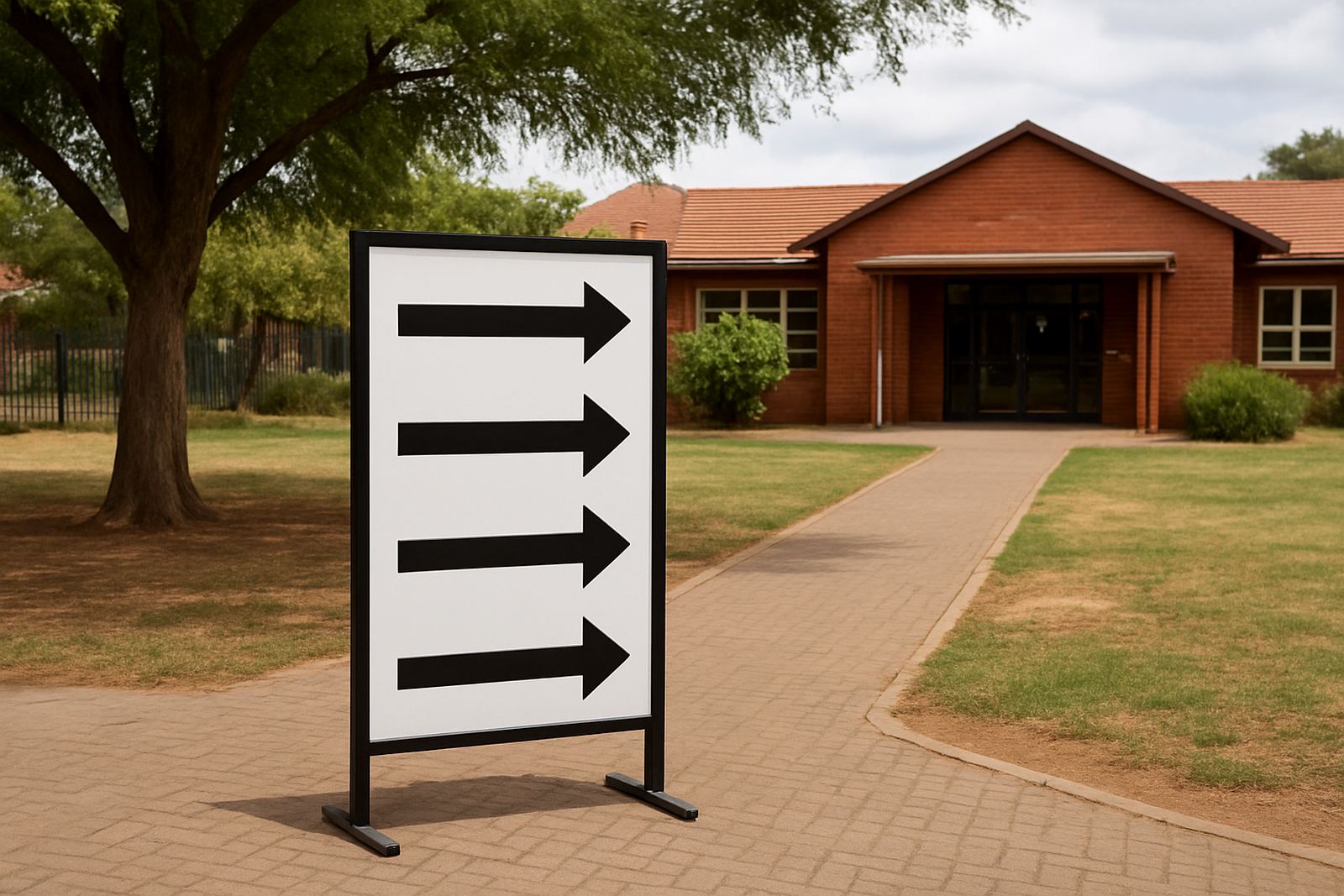
We supplied a fabricated roadside sign and several directional boards sized to match the approach distances on site. The panels were made for outdoor use with a weather-resistant face and a frame that could handle wind movement better than a thin board would. The graphics were produced with cut and printed vinyl, then finished with a protective lamination to help the colours stay sharp in the Free State sun.
The installation team anchored the main sign securely and set the boards at angles that made them legible from the gate approach and from inside the yard. Where required, we used clean edge finishing and neat fixing points so the signage looked orderly, not overbuilt or temporary. The final result was practical, tidy and easy to maintain.
- Main entrance sign with weather-resistant face
- Directional boards for office, yard and service areas
- Cut vinyl and printed graphics with protective lamination
- Secure mounting for roadside exposure and wind
Artwork setup and layout decisions that kept it legible
The graphic design work focused on distance reading. Zanele Dlamini prepared the artwork so the lettering stayed bold enough to read from a vehicle without needing to slow down much. We redrew the logo elements where needed, then simplified spacing and alignment to avoid crowding. The client wanted the farm name to carry the sign, not decorative extras.
Because this was a working agricultural site, the directional wording had to be plain and practical. Our team kept the terminology consistent across every board so visitors would not have to guess which way to turn for deliveries, staff access or admin. That kind of consistency saves time on site and reduces confused traffic at the gate. Johan Smit checked the installation positions before final fixing, and Thabo Ncgobo prepared the fabrication details so the units sat square and true.
There was a small amount of back-and-forth on wording and placement, but the process stayed efficient. Annelie Botha managed the client communication so approvals moved along without delay, and the printing was scheduled in line with the install date. The whole job stayed within a two-week turnaround from site check to final handover.
Installation near Thaba Nchu and the handover on site
Once fabrication was complete, the installation team travelled out to the farm near Thaba Nchu and fitted the entrance sign first, followed by the directional boards in sequence. The main sign needed to be visible from the approach road while still sitting safely clear of the turning area. That balance between visibility and access is often the difference between a sign that works and one that causes frustration.
The handover included checking sightlines from both directions, confirming the wording with the client and making sure the fixing points were secure. We also discussed maintenance visits for later, because dust and weather can dull even a good sign over time. A quick clean and inspection every so often will keep the boards readable for much longer.
- Final position confirmed on site before fixing
- Visibility checked from both traffic directions
- Safe clearance maintained for farm vehicles and visitors
- Maintenance advice given for cleaning and inspection
What the client gained after the new signage went up
The result was immediate: visitors could find the entrance more quickly, and the directional boards reduced confusion once they were on the property. For a farm operation, that means fewer unnecessary stops at the gate, less chance of vehicles taking the wrong turn, and a better first impression for suppliers and contractors. It also gave the property a more organised look, which matters when clients and service teams arrive on busy days.
If we were to do a similar project again, we would keep the same approach: a site survey first, simple artwork, large lettering and a durable finish suited to the local conditions. For agricultural clients in Thaba Nchu, Mangaung and surrounding towns, that combination works well because it balances visibility, strength and value. It is practical sign making, not fuss and not guesswork.
Central Signs in Bloemfontein handles this kind of work across the Free State, including signage for farms, depots and access roads in Botshabelo, Thaba Nchu, Welkom and Kroonstad. If a site needs a better entrance marker or clear wayfinding boards, we can plan the layout, produce the signage and install it properly.
Key facts
| Project type | Roadside entrance sign and directional boards |
|---|---|
| Client area | Near Thaba Nchu, Free State |
| Turnaround | 2 weeks from site survey to installation |
| Materials | Outdoor sign panels, cut and printed vinyl, protective lamination |
| Application | Roadside visibility, gate identification and on-site wayfinding |
| Service team | Site survey, artwork setup, fabrication and installation |