Signs that suit the pace of a busy food outlet
At a takeaway, café, bakery or quick-service counter, every sign has a job. Customers need to spot the shop from the road, find the entrance without confusion, and see what is on offer before they reach the counter. In Bloemfontein, that often means strong visibility in dry, bright conditions, with signs that still read well when the power goes off and the lights are on backup. We work from Hamilton, Bloemfontein and supply food outlet signage across Mangaung, Botshabelo, Thaba Nchu, Welkom and Kroonstad.
For food businesses, the usual brief is simple: make the menu easier to read, the queue easier to manage, and the frontage more inviting. That can include a main shop sign, a vinyl menu board, window branding, door notices, directional arrows, and floor graphics for queue flow. We also handle debranding and refurbishment where a site has changed tenants or the old signage has faded, lifted or been overprinted.
Typical sign sets for takeaways and cafés
The right set depends on your counter layout, street exposure and whether customers order inside, through a hatch, or at the window. For many food outlets, we will combine a few elements rather than one large sign, so the customer gets the right information at the right point.
- Shopfront name sign in cut vinyl, printed panel, or fabricated sign box
- Window branding for opening times, specials, payment methods and hygiene notices
- Menu boards above the counter or at the order point
- Directional signs for entrance, collection point, restrooms and parking
- Floor decals for queue lines, distancing or pickup routing
- Outdoor banners for specials, promotions and opening announcements
For a compact takeaway, a clean window package and one readable menu board often does more than a crowded frontage. Bigger sites may need a full set with multiple prices, combo boards, and separate signs for delivery collections. Our production team can set artwork, redraw logos, print, laminate, fabricate and install to suit the site conditions.
Planning the layout so customers move naturally
The best food signage starts with the customer’s path. We look at where people park, where they join the queue, where they pause to read, and where staff need space to work. A sign placed too high, too low, or behind reflective glass can lose impact fast. If your shop is on a busy street in Bloemfontein or near a transport route in Mangaung, the layout must work for moving traffic as well as walk-in customers.
Menu boards should sit where people can read them without blocking the counter. Window branding should leave enough open area for natural light and visibility into the shop. Directional signs should be short and direct, because in a rush nobody wants a long sentence. We also factor in glare, dust, cleaning chemicals, and coastal humidity is not the issue here but temperature changes and dry air can still affect vinyl and adhesives over time.
- Use large lettering for the main item names and prices
- Keep specials separate from permanent menu items
- Leave space for future price changes
- Position illuminated signs where they can be seen from the road
- Avoid placing key text across door handles, frames or dark tinted glass
Materials that hold up in food environments
Food outlets deal with heat, steam, grease, cleaning spray and constant touching on doors and counters. That means the material choice matters as much as the artwork. For windows and walls we often use cut vinyl or printed and laminated film. For menu boards and exterior signage we may use rigid panels, lightbox faces, or fabricated sign components depending on the site and budget. Floors need tougher graphics with proper slip resistance where people walk.
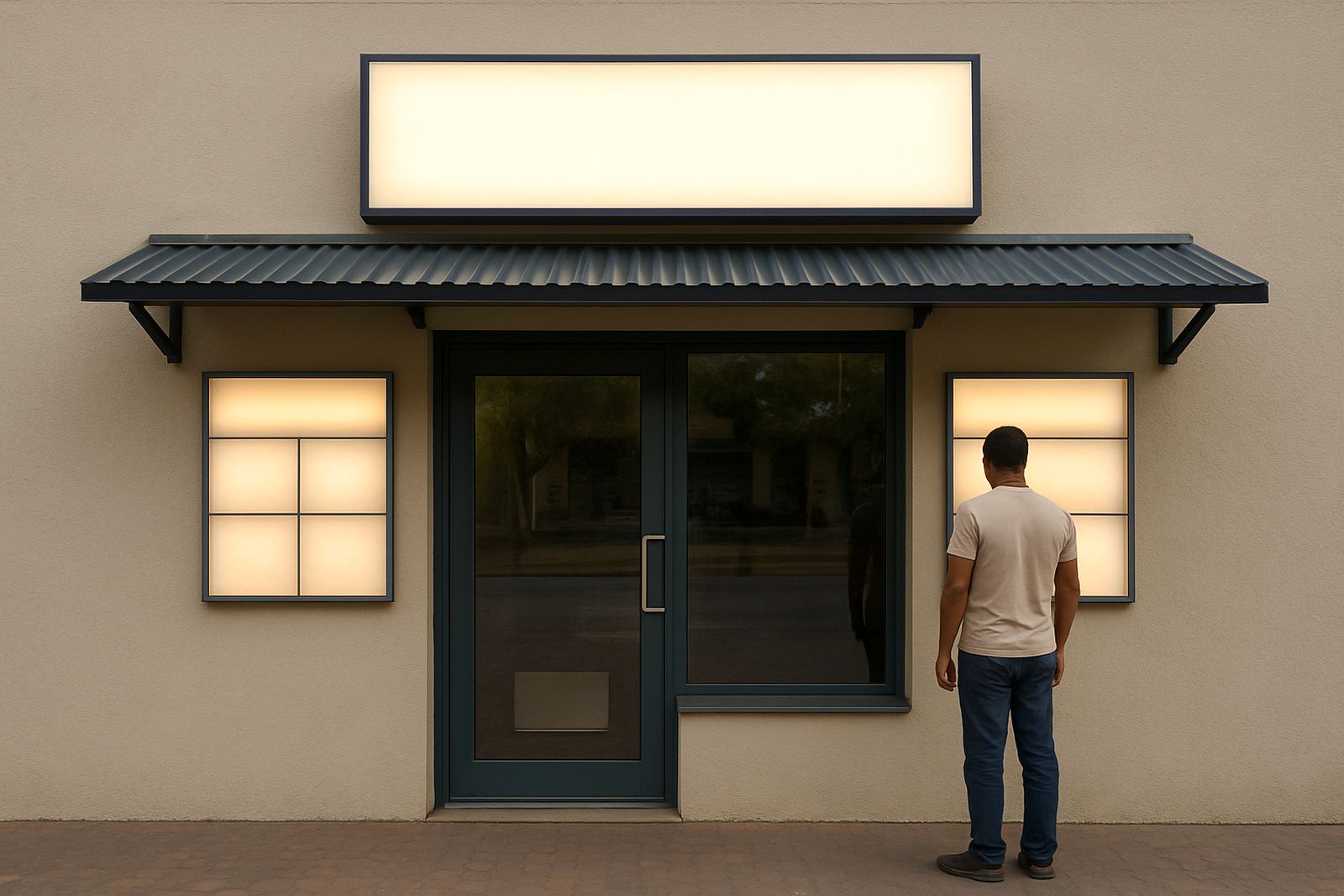
Where there is frequent cleaning, we recommend finishes that can handle wiping without lifting or fading too quickly. On delivery entrances and kitchens, simpler signs are often better because they are easier to keep clean. If the outlet trades after dark or during load-shedding, a lightbox, internally lit cabinet, or well-placed reflective solution can help customers find the shop and read the name from the road.
- Exterior shop signs for the main identity
- Printed and laminated vinyl for menu changes and specials
- Etched-look window graphics for a neater front-of-house feel
- Floor graphics for route marking and queue control
- Maintenance visits for lifting edges, fading or damaged panels
Common mistakes we see on food outlet signage
Many food businesses spend money on signs, then find the shop still looks unclear because the message is overloaded. Too many fonts, too many colours and too much text can make a frontage harder to read, not easier. Another common mistake is using a small menu board that looks fine in the office but becomes unreadable once it is mounted above head height. We also see pricing changed on one panel and forgotten on another, which creates confusion and a bad customer experience.
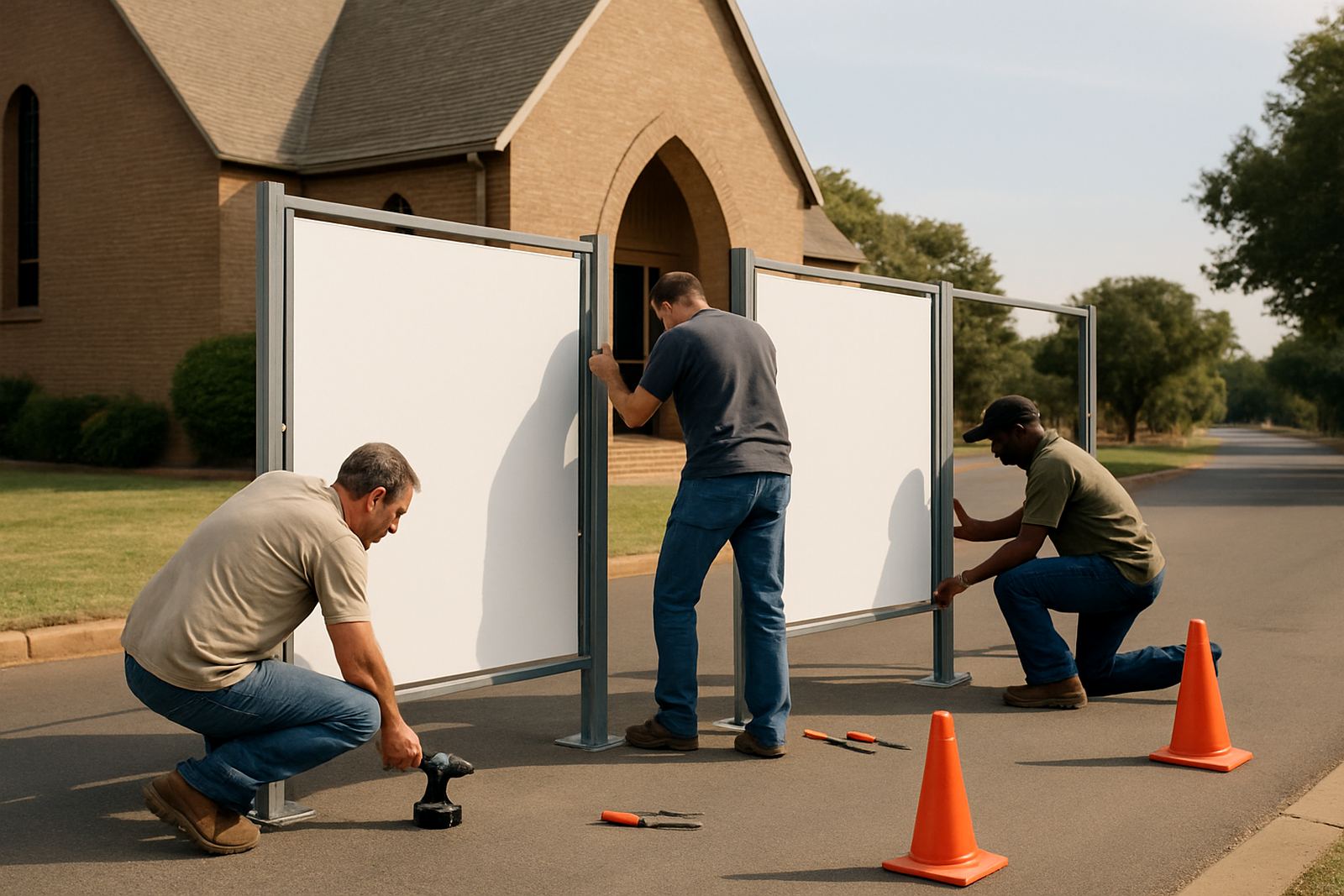
Another issue is poor installation. If the panel is fixed badly on uneven walls, or vinyl is applied over dusty glass, the sign will age badly from day one. In Bloemfontein and surrounding towns, wind, sun and dust can punish weak fixing methods. For vehicle branding on delivery cars and bakkies, the surface prep must be done properly or the edges start lifting. Johan Smit handles installation, while Kagiso Moeketsi leads vehicle graphics, so we are used to matching the sign type to the site and the vehicle finish.
- Using fonts that are too decorative for fast reading
- Leaving out trading hours, payment options or collection details
- Choosing a colour scheme with poor contrast
- Not planning for menu changes and price updates
- Ignoring power cuts and low-light trading conditions
Budget ranges for food outlet signs in Rand
Budget depends on the number of sign faces, size, materials, and whether installation is needed. A small food outlet that only needs window branding and a single menu board can usually work within a modest budget. A larger restaurant, drive-through style setup, or a site with multiple directions and illuminated elements will cost more. We quote to the actual site, because access, height, wall condition and electrical needs can change the job quite a bit.
As a guide, simple window graphics or a small directional sign may start from about R850 to R2 500. A practical menu board setup or a small shopfront sign often falls between R3 500 and R9 500. Larger fabricated signs, full frontage packages, or multiple menu panels can range from R10 000 to R35 000 and above, depending on size and finish. If the site needs debranding, refurbishment, or several signs across different branches, the budget will shift again. The best starting point is a proper site survey and a clear list of what the customer must see first.
Getting the sign package right for your branch
Food outlets in Bloemfontein, Botshabelo, Thaba Nchu, Welkom and Kroonstad often need the same core thing: a sign system that helps customers move quickly and trust the brand. We handle site surveys, artwork setup, logo redraws, print production, vinyl cutting, lamination, fabrication, installation, vehicle application, refurbishment and maintenance visits. That means one team can manage the front of shop, the windows, the doors and even delivery vehicles, so the look stays consistent.
For new outlets, the smartest approach is usually to start with the customer flow, then add the identity, then finish with the extra details. For existing outlets, a tidy refresh can make a big difference without replacing everything. If your food outlet needs clearer menus, better visibility or a cleaner frontage, use the enquiry form on our contact page and we will plan it around your site, your budget and your trading hours.