Reception branding that does the first job well
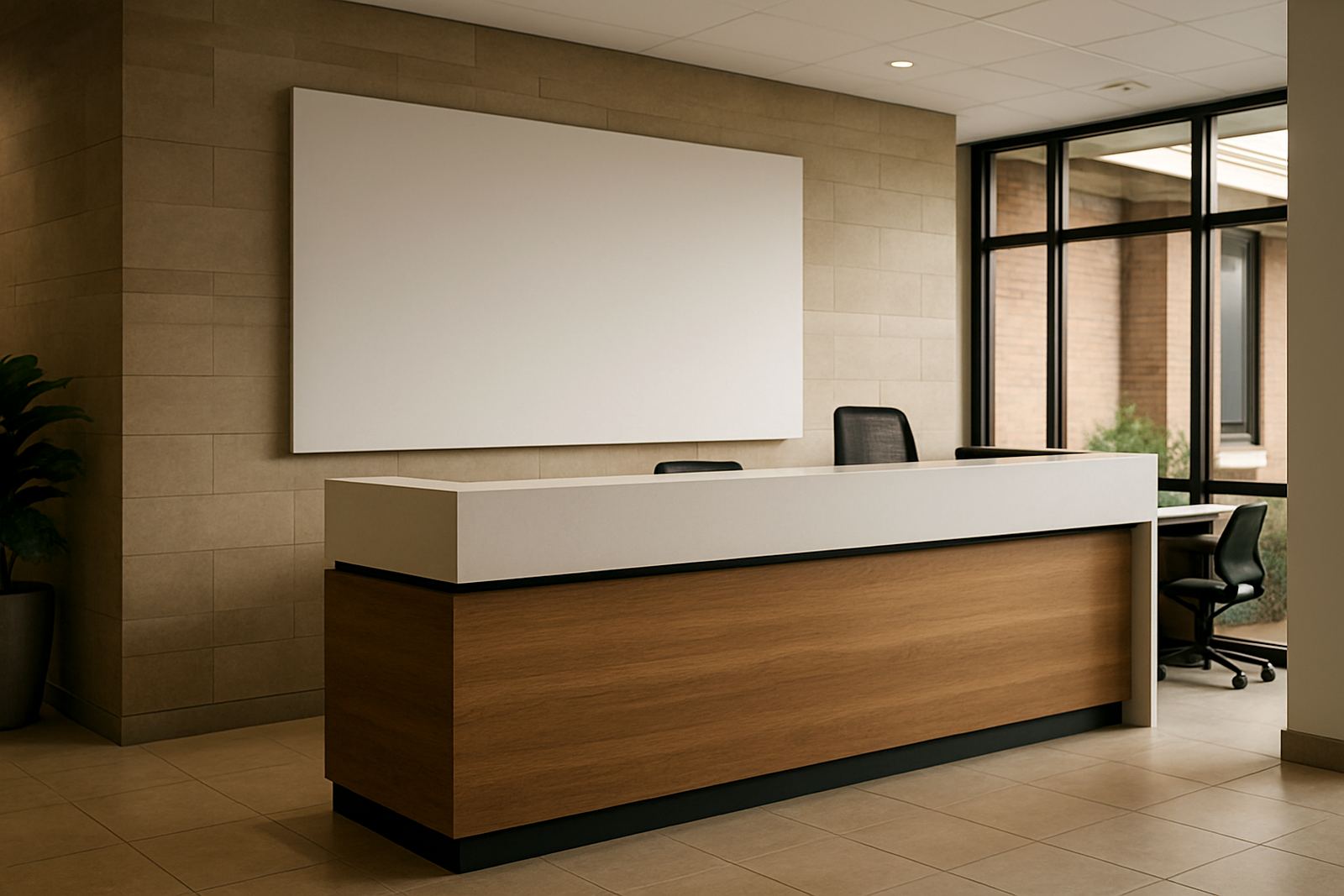
Reception signs are the branding pieces that sit in the most visible part of your premises, usually behind a counter, above a feature wall or near the main entrance. They help visitors find the right place, confirm they are in the right building, and carry your name in a clean, professional way. For many businesses in Bloemfontein, Mangaung and towns like Welkom and Kroonstad, this is the first sign a client sees before they speak to anyone.
We make reception signs in a range of finishes, from flat vinyl graphics to built-up lettering, printed panels and layered logo pieces. The right choice depends on the wall surface, your logo style, the amount of light in the area and how formal you want the space to feel. A small practice may only need a neat logo panel and hours board, while a head office may want a full feature wall with dimensional lettering and a reception counter wrap.
Most reception signs are made for indoor use, but some are installed at sheltered entrances where sunlight and dust still matter. In those cases, we use materials and adhesives suited to heat, dry Free State air and the shift from hot days to cool nights. If the site is in a busy building or retail centre, we also look at cleaning access and how much scuffing the lower panels may take.
Sizes, formats and finish options for different interiors
Reception signs are not one-size-fits-all. We size them to the wall, the viewing distance and the available space around the counter, doorways and lighting. A logo behind a small front counter may be 600 mm to 1200 mm wide, while a corporate feature wall can run from 2 metres to 6 metres or more depending on the foyer. Height is just as important, because a sign that sits too high can be lost in the space, and one that sits too low can crowd the reception area.
- Flat printed panels for a clean corporate look
- Vinyl lettering and logos for smooth painted walls or glass
- Layered acrylic or PVC letters for added depth
- Backed panels for uneven surfaces and quick installation
- Door and directional signs that tie into the main reception branding
Finish options usually include matt, satin or gloss, plus coloured print, cut vinyl, brushed effect panels or clear panels with stand-off mounting. If the office gets a lot of natural light, we often recommend matt finishes to reduce glare. For interior walls with texture, we may use a backing board so the artwork stays level and readable. In buildings with glass fronts, frosted vinyl can give privacy without making the space feel closed in.
Where reception signs suit best in Bloemfontein spaces
Reception signs suit any business that wants a neat, controlled welcome point. We supply them for medical rooms, attorneys, accountants, schools, training centres, estate offices, government-facing spaces, warehouses with customer service counters and hospitality venues. In Bloemfontein, a lot of clients want reception branding that can handle a professional corporate look while still being practical to clean and maintain.
They also work well in buildings where visitors need clear direction. A reception wall can be matched with door labels, floor decals, room numbers and wall graphics so the full front-of-house area feels organised. That is useful in multi-tenant offices and service centres where people arrive stressed or unsure where to go. A clear sign cuts confusion, which helps staff as much as visitors.
For industrial or commercial sites around Mangaung, Botshabelo and Thaba Nchu, reception signs often need tougher materials than a standard office display. Dust, frequent contact and strong indoor lighting can all affect appearance over time. We choose materials with that in mind, and we can also prepare signs for areas that are cleaned daily or where humidity from nearby kitchens or wash bays may be higher than usual.
Installation details, power needs and site conditions
Most reception signs do not need power or gas. They are fixed with adhesive, screws, stand-offs or panel supports, depending on the wall and the sign type. If the design includes illumination, then power planning becomes part of the job and we need to check the available supply point, the cable route and whether a qualified electrician must handle the final connection. We do not guess on this part, because a neat sign still needs safe wiring and the right access.
Before installation we check the wall surface, the substrate, and any obstacles such as plugs, skirting, fire equipment or existing fittings. In older buildings around central Bloemfontein, walls can be uneven or patched, so a backing panel may be the better choice. In newer offices, hidden services and glazed areas can affect where we mount the sign and how far it should stand off the wall.
- Check wall type, paint condition and any moisture issues
- Confirm the exact finished size before production
- Allow clear space for counter movement, doors and opening panels
- Tell us if the sign must be removable for future rebranding
- Advise on site access, parking and working hours before install day
On busy sites we plan installation around trading times so reception is not blocked when visitors arrive. Johan Smit handles site fitting on many of these jobs, and for vehicle-linked branding or matching graphics, Kagiso Moeketsi often ensures the finish stays consistent from the entrance right through to the fleet. On larger interiors, it helps if the client can point out any last-minute changes on site before fixing starts, because moving a sign after drilling is never ideal.
Care, cleaning and servicing after installation
Reception signs should be easy to maintain. In most cases, a soft cloth, clean water and a mild non-abrasive cleaner are enough. Avoid harsh solvents, rough pads or strong chemicals, especially on printed vinyl, acrylic faces and laminated panels. If the sign is in a high-touch area near the counter, regular dusting and a quick wipe after cleaning helps keep fingerprints and marks from building up.
South African offices often run air-conditioning, heaters and lights for long hours, so minor movement, dust and adhesive ageing can happen over time. In dry Free State conditions, edges stay stable for long periods, but in warmer or more humid indoor spaces, we still recommend an occasional check. If a panel starts lifting, if a letter loosens, or if the wall paint changes from a new renovation, it is better to deal with it early.
We also offer maintenance visits, refurbishments and debranding where required. That can include replacing a damaged face, updating a logo, changing a company name or refreshing a worn reception wall after a tenancy change. Annelie Botha usually helps clients organise the work and timing, which is useful when several areas need to be done in stages rather than all at once.
What to prepare when ordering your reception sign
The better the brief, the better the result. We need a clear idea of the space, the wall size and the look you want. If the logo artwork is available in a clean format, that saves time. If not, we can handle artwork setup and logo redraws from a good quality file or a photograph, although a crisp original is always best. Zanele Dlamini often checks the artwork side carefully so the final sign stays sharp and correctly proportioned.
Before you order, please check these points:
- Exact wall or panel measurements, including height and width
- Whether the sign is for indoor use, sheltered entry use or a high-light area
- Preferred finish, colour and mounting style
- Whether the reception area will need matching wall, door or floor graphics
- Any building rules, landlord rules or approval steps before fixing
- Timing for installation, especially if staff or clients will be on site
If your reception sign is part of a wider branch rollout, we can keep the look consistent across Bloemfontein, Brandfort, Winburg, Mangaung and other Free State locations. That is often the best way to make sure each site feels connected without looking copied and pasted. Marius Jacobus van Rensburg oversees the business direction, and Thabo Ncgobo supports fabrication where panels, trims or built-up elements need careful finishing before installation.
Key facts
| Typical sizes | From 600 mm wide up to 6 m plus, depending on wall space and viewing distance |
|---|---|
| Common materials | Acrylic, PVC board, composite panel, printed vinyl, laminated graphics, stand-off letters |
| Use case | Reception counters, welcome walls, foyers, lobbies, client areas and front entrances |
| Installation methods | Adhesive mounting, screw fixing, stand-offs, panel backing and concealed supports |
| Power or gas needs | Usually none, except for illuminated signs which need electrical planning |
| Service area | Bloemfontein, Mangaung, Botshabelo, Thaba Nchu, Welkom, Kroonstad, Brandfort and Winburg |