
What window frosting does on glass
Window frosting is a vinyl film applied to glass to create an etched or sandblasted look without actually altering the pane. It is used for privacy, decorative striping, meeting room screening, safety marking and logo application on windows, doors and internal partitions. In a Bloemfontein office, that often means softer glare in the morning sun and less direct view into reception areas.
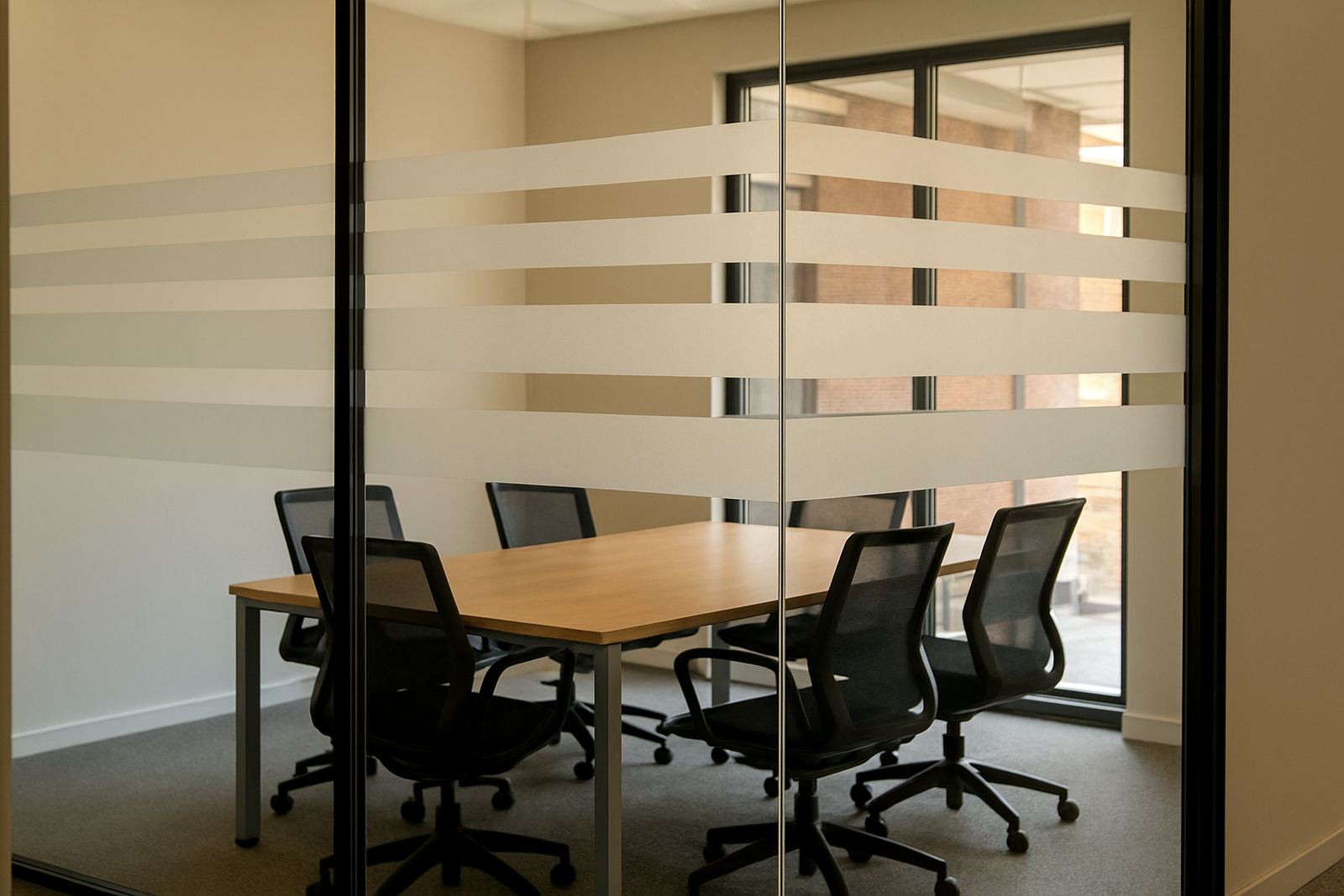
The film can be cut into full panels, bands, motifs, lettering or neat safety strips. Because it sits on the glass surface, it works well for tenant spaces where you may later need to remove or change the branding. It is also a practical option for rental properties, clinics, professional rooms, shops and municipal spaces where a clean, controlled appearance matters.
For businesses in Mangaung and surrounding towns, frosting is useful on street-facing windows too. It can block low-level views from the pavement while still letting natural light come in, which helps during load-shedding when internal lighting and daylight need to work together.
Sizes, finishes and cut options available
Window frosting can be supplied in different widths and cut to suit the glass on hand. Standard film rolls are commonly used for small panels, while larger glazing can be tiled with careful joins when needed. We measure on site where possible, then set out the artwork to suit each pane and frame line.
You can choose from simple solid frosting, patterned blocks, cut-out logos, edge borders or custom privacy bands. Some clients prefer a full frosted sheet with clear logo cut-outs, while others want a lower band at seated eye level only. It is also common to use frosting in combination with printed decals or directional signage on the same glazing.
- Full panel frosting for complete privacy
- Band frosting for meeting rooms and front windows
- Logo cut-outs for reception or client-facing areas
- Directional arrows and room names on internal glass
- Decorative patterns for retail, health and office spaces
For glass doors, we usually recommend a visible strip at eye level for safety. That helps reduce accidents where people move through busy areas or near entrances.
Where frosting works best in Free State premises
Window frosting suits office fronts, consult rooms, boardrooms, reception areas, shopfronts, schools, churches and home offices. It is especially useful on partition glazing where people need privacy but still want borrowed light from the windows. In Bloemfontein, where summer sun can be strong, it also cuts glare on glass near workstations and counters.
Shops in central business areas often use frosting for a cleaner frontage and to hide stock storage or service rooms from public view. Medical and wellness rooms use it to create discretion without putting up heavy blinds. On glass doors and side panels, it can mark the doorway clearly and reduce bird strikes on clear panes, which is a practical consideration in some open courtyards and atriums.
For branches in Botshabelo, Thaba Nchu, Welkom and Kroonstad, frosting is a good fit for durable indoor branding because it does not rely on cloth, paper or loose fittings. On windy days or in busy walkways, it stays in place and keeps the look tidy.
Installation on site and power requirements
Most frosting jobs are installed on site after glass has been cleaned and checked for chips, dust and silicone residue. The surface must be dry and free of loose paint or powdery sealant. For larger panels, we plan the layout, apply the film with water and squeegees, then trim to the exact edge. Doors and partitions are finished with neat alignment so the film sits square to the frame.
Power or gas is generally not needed for the installation itself. We use hand tools and fitting equipment only, so the job can be done in offices, retail areas and occupied premises with minimal disruption. For evening or after-hours installs, lighting at the site helps, especially where reflections on glass can make positioning tricky. If access is difficult or the height is above normal reach, extra equipment may be needed for safe installation.
- Clean, dry glass is essential before fitting
- Allow access to both sides of the pane where possible
- Temporary removal of items near the glass may be needed
- We can work around business hours to limit downtime
Load-shedding does not usually stop the fitting, but if the area is dark, good portable lighting helps with alignment and finish quality.
Care, cleaning and long-term service
Once fitted, frosting is simple to maintain. Use a soft cloth, clean water and a mild non-abrasive cleaner. Avoid scourers, strong solvents and sharp blades on the film surface. When cleaning, do not lift the edge of the film or scrub the corners hard, because that can shorten the life of the edges.
In air-conditioned offices and coastal humidity there can be a little more condensation on glass, especially early in the morning. That does not usually damage the film, but it does mean the panes should be wiped dry regularly so mineral marks do not build up. Where people touch the glass often, such as on doors and reception areas, fingerprints can be removed with gentle cleaning.
We also handle refurbishments, replacement sections and debranding where a tenant changes or a room use changes. If a panel is damaged by furniture, cleaning chemicals or security film conflict, a section can often be replaced without redoing the full pane.
What to check before you order
Before ordering window frosting, it helps to know exactly what you want the glass to do. Decide whether the main aim is privacy, branding, glare control or safety marking. Then measure the panes, note any frames, handles, locking points or transom bars and decide where clear viewing lines must stay open.
- Glass size and the number of panes to be covered
- Whether the frosting is full height or only a band
- Logos, wording or patterns that must be included
- Any doors, handles, hinges or push plates to avoid
- Indoor or outdoor exposure, including sun and cleaning conditions
- Whether the job is new branding or a replacement of old film
It also helps to check the background seen through the glass. A frosted finish looks different against a bright outside pavement than it does against an internal office wall. If the room is used for client meetings, think about sight lines from the reception side and from the street. A small layout change can make the final result much better, and save a reprint.
Key facts
| Material | Etched-look self-adhesive vinyl frosting |
|---|---|
| Typical use | Privacy, decorative branding, partition glazing and door marking |
| Finish options | Solid frost, cut logo panels, bands, borders and patterns |
| Common panel sizes | Cut to measure from small door panes to large shopfront glazing |
| Installation | On-site application to clean glass surfaces |
| Maintenance | Mild cleaner, soft cloth, no abrasive pads or solvents |