Check the exact fitting point before the team leaves
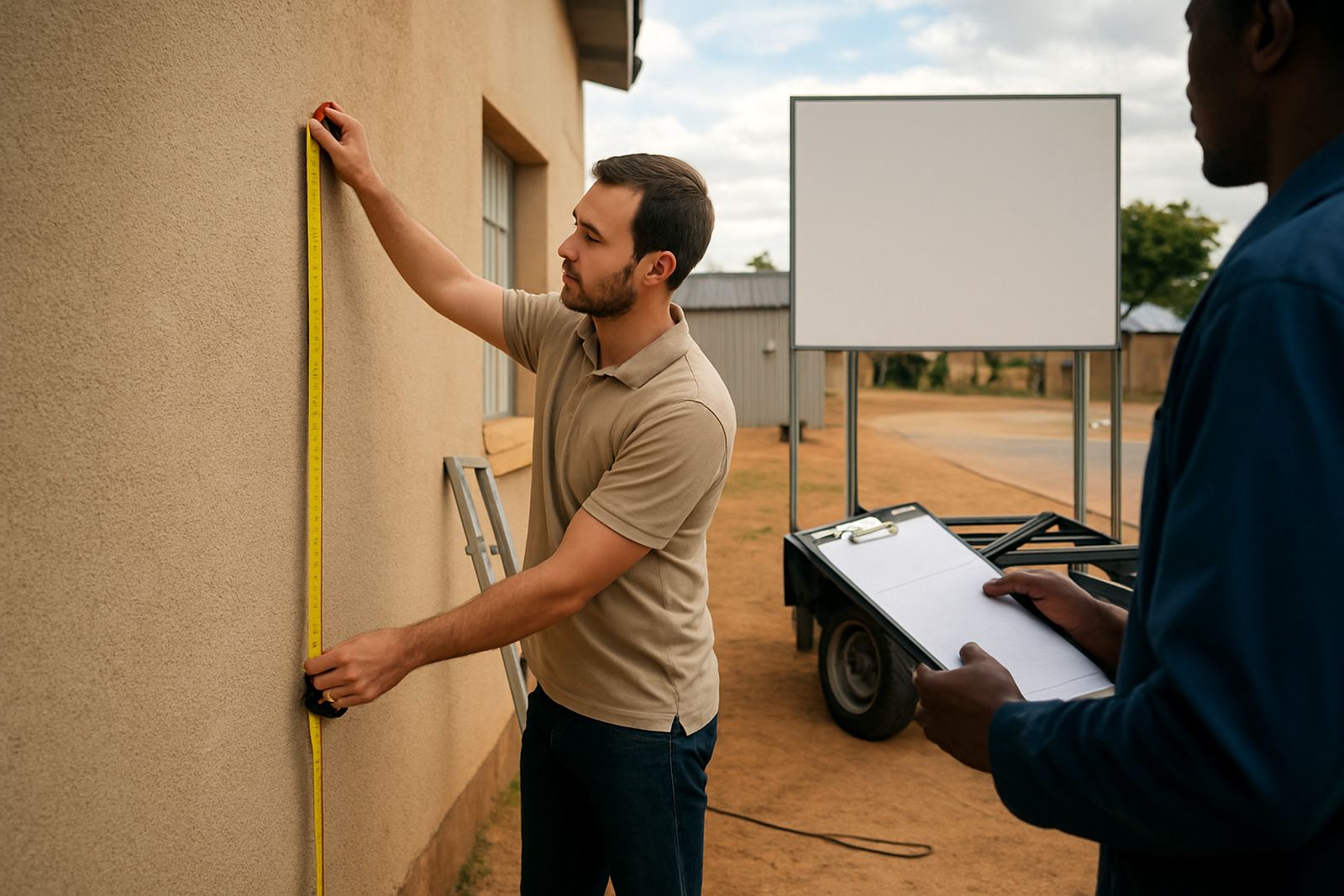
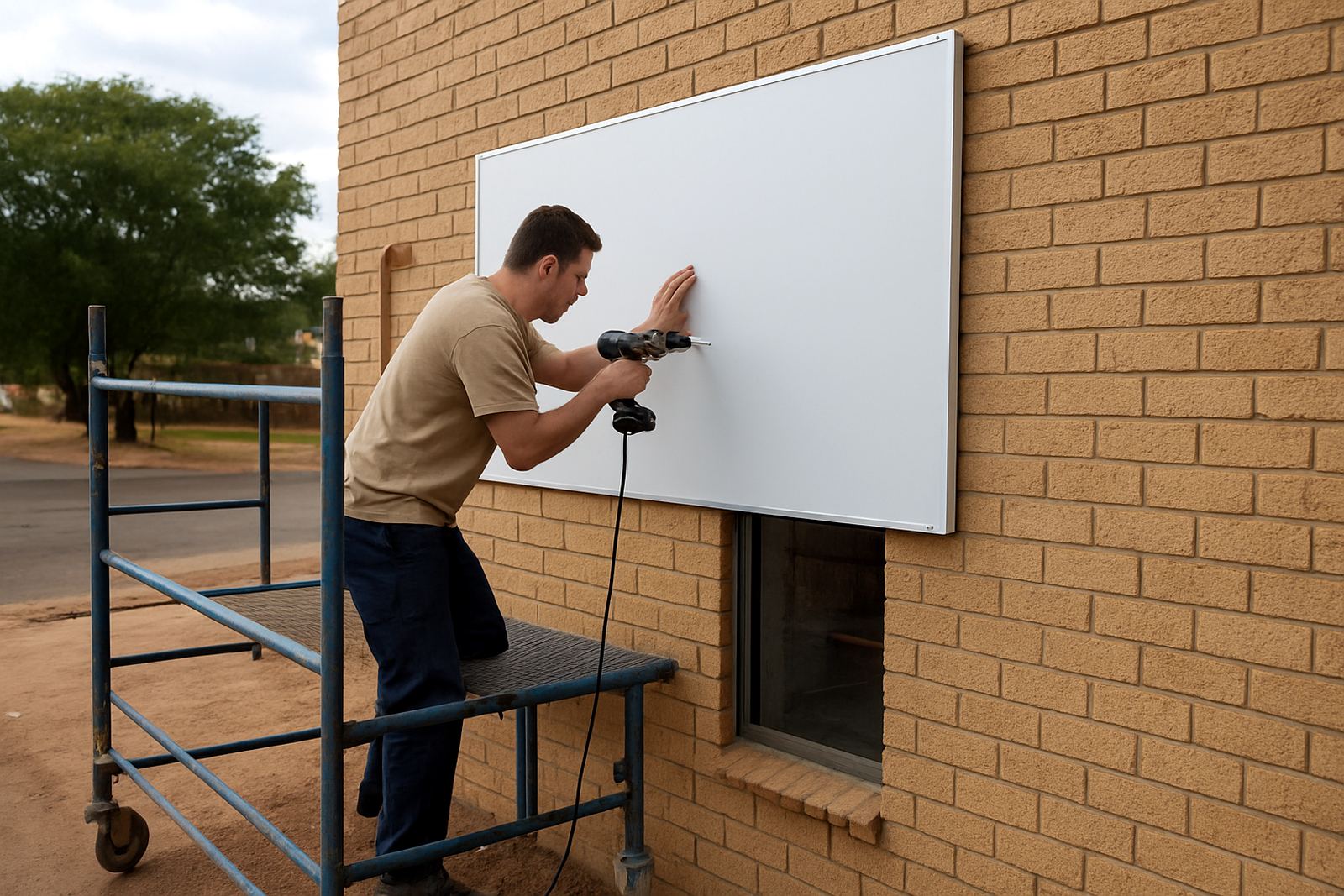
Please make sure the person who booked the job can point out the exact sign location, not just the building name. For shopfronts, offices, factories and schools, the fitting point can be a wall, fascia, window, gate, roller shutter, floor area or vehicle bay, and each one needs different access.
Where possible, mark the area with tape, chalk or a simple note so there is no confusion on the day. If the sign is going above eye level or across more than one panel, please confirm the full width and height and whether there are pipes, conduits, lights or air vents in the way.
- Confirm the exact wall, window, door or vehicle to be fitted.
- Send any site sketch, photo or measured layout before arrival.
- Point out fixed objects that may affect drilling, printing or alignment.
Make the site easy to reach for tools and materials
Our team needs clear access for ladders, ladders, ladders lifts, ladders? Actually one correction: our team needs clear access for ladders, tools, vinyl rolls, boards and cleaning equipment. Please keep the route from parking to the work area open, especially at busy retail centres, schools and multi-tenant buildings in Bloemfontein and Mangaung.
If the fitting is in a secure park or industrial area, arrange entry with reception, security or the site manager before we arrive. Gates, boom controls and after-hours access points should be tested and ready. If loading bays are narrow, tell us in advance so we can plan the safest offloading method and avoid delays.
- Reserve parking close to the entrance if possible.
- Unlock side gates, roller doors and internal corridors.
- Keep stock, pallets and loose furniture out of the access path.
Power, lighting and weather matter on installation day
Some jobs need power for drills, heat guns, lighting or lift equipment. Please tell us if the site has unstable power, frequent load-shedding or a generator with limited sockets. In winter, early morning jobs in the Free State can be very cold, and adhesive films can behave differently on chilled surfaces, so timing matters.
For exterior signs and vehicle graphics, please also consider wind, dust and rain. Strong wind can make banner fitting and elevated work unsafe, while damp walls and moisture on glass can affect adhesion. If the surface has just been washed, painted or repaired, allow the correct curing time before installation.
- Confirm whether mains power is available at the fitting point.
- Advise on any load-shedding window for the day.
- Delay fresh paint, plaster or sealant work until it is properly cured.
Safety rules we need confirmed before work starts
We work carefully, but every site has its own risks. Please tell us about alarm systems, cameras, access codes, forklifts, overhead cranes, high pedestrian traffic or controlled areas. If your premises require hard hats, reflective vests, safety boots or visitor induction, let us know before the appointment.
For schools, clinics, factories and municipal buildings in and around Bloemfontein, the person responsible for the site should be available to authorise the job and stop the work if something changes. A quick safety briefing on arrival helps us avoid interruptions and keeps everyone focused.
- Share any site induction or PPE requirements in advance.
- Point out high-risk areas, moving vehicles and restricted zones.
- Make sure one responsible contact is on site for sign-off.
What to do for windows, walls, doors and floors
Different surfaces need different preparation. Glass should be clean and dry, with no fresh cleaning fluid left behind. Painted walls should be sound, not dusty or flaking. Metal doors and shutters should be free of oil, rust and heavy grime. Floor graphics need a smooth, dry surface with enough curing time after washing or painting.
If you are unsure whether the surface is ready, ask us to check it during a site survey or on the day before fitting starts. That is especially important for older buildings in Kroonstad, Welkom and Thaba Nchu where wall finishes can vary from one section to the next.
- Clean the surface lightly before the team arrives.
- Remove loose paint, dust and grease where possible.
- Keep the area dry and avoid cleaning it again just before installation.
How to prepare for vehicle graphics and debranding
For vehicle branding, please park the vehicle in a clean, shaded area with enough space to open all doors and walk around it. We need room for surface prep, panel alignment and drying time. If the vehicle has just been washed, make sure it is fully dry before fitting begins.
For debranding, remove personal items from the vehicle and tell us about existing dents, repainting, accident repairs or body filler. These can affect vinyl removal and the finish of new graphics. If a fleet has more than one bakkie, panel van or car, please label each vehicle clearly so the right artwork goes on the right unit.
- Wash the vehicle and let it dry fully before arrival.
- Provide enough space for doors, tailgates and side panels.
- Confirm vehicle numbers or registration details for fleet work.
If access changes on the day, tell us immediately
Sometimes a gate is locked, a manager is off site, or the fitting point is blocked by stock, deliveries or rain. If anything changes, please contact us as soon as possible through the enquiry form on our contact page so we can adjust the plan. A small delay is easier to handle than rushing a job in unsafe conditions.
When access is ready, our team can move through the work in an orderly way and keep the site neat. That applies whether we are fitting a single shop sign, a set of decals or a full installation across windows, walls and doors.
Good access means a better finish, fewer interruptions and less time spent waiting around. It also helps us protect your property, the sign materials and the people on site.