
Start with the job your vehicle must do
Before you choose colours or graphics, decide what the vehicle must achieve on the road. A courier bakkie in Bloemfontein needs quick identification at traffic lights and parking areas, while a service van that travels to Mangaung, Botshabelo or Thaba Nchu may need contact details, a clear service list and enough space for branding that can be read from a passing car.
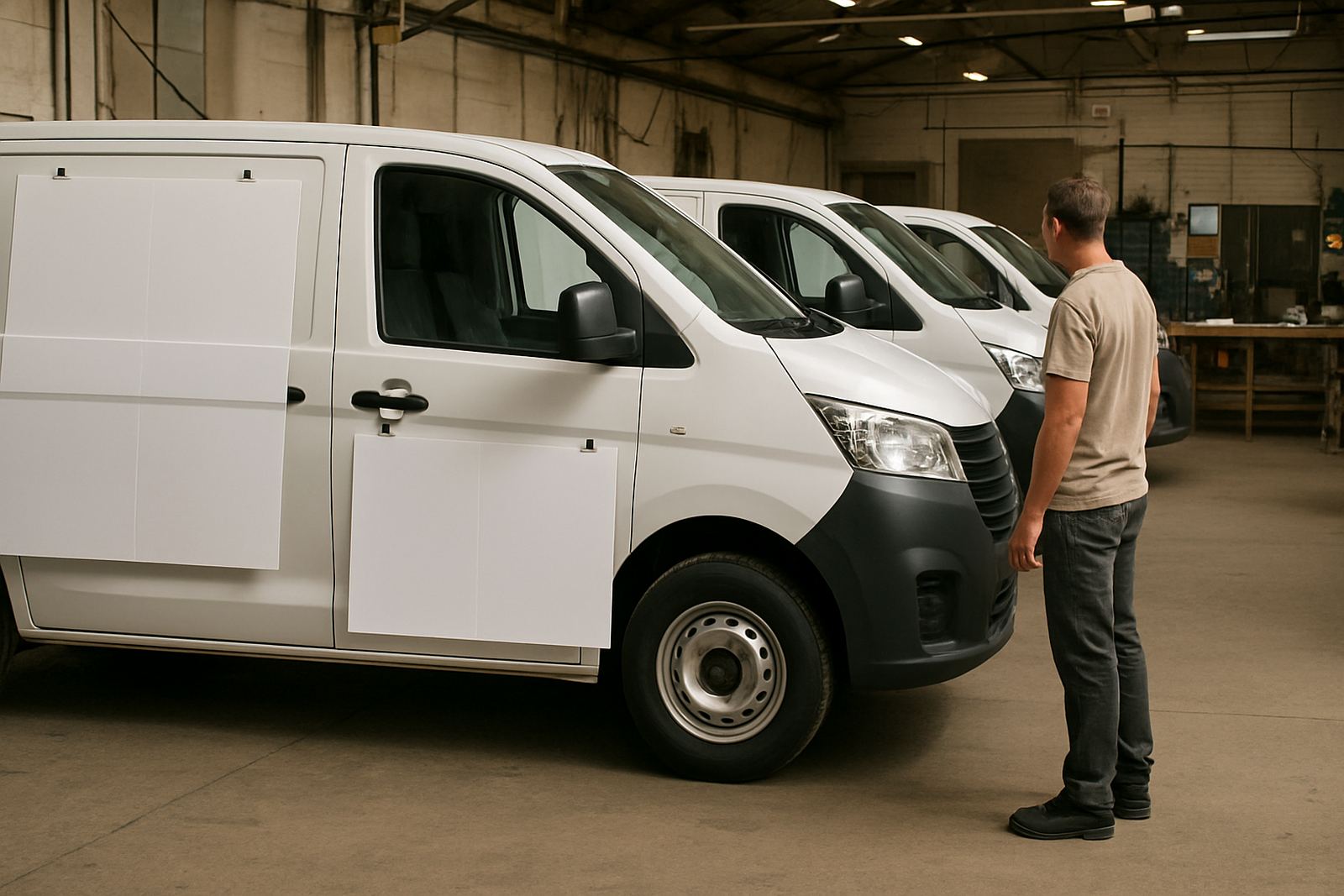
Think about the vehicle type, too. A hatchback, panel van, single cab bakkie or truck body all offer different panel sizes and different sight lines. A fleet with mixed vehicles needs a design system that can carry across every unit without forcing the same layout onto each shape. That is where a proper site survey and vehicle check save time later.
- List what drivers need to say in 3 seconds or less
- Note each vehicle size, colour and body shape
- Check where doors, handles, fuel caps and trims interrupt the layout
- Decide if the branding must work for one vehicle or a fleet of ten or more
Keep the message short enough for traffic
Most fleet branding is seen at a glance, often while another car is moving, turning or braking. Long slogans and crowded artwork can look fine on paper but disappear in traffic. The best vehicle graphics usually carry one strong logo, the business name, a service line and a way to make contact, nothing more than that.
For a Bloemfontein business, that means thinking about where the vehicle is driven. In town you may have stop-start traffic, school runs and municipal roads with lots of close viewing. On the N1 or between towns the message must hold up at higher speeds. Large type, strong contrast and a clean layout matter more than fancy effects.
- Use one main contact method only, such as a website enquiry form or a single office number
- Keep the service list tight, for example plumbing, maintenance or deliveries
- Choose colours that show up clearly on white, silver, dark blue or grey vehicles
- Leave breathing room around the logo so the design does not feel packed
Match the material to Free State sun and weather
Fleet graphics have to cope with heat, dust, rain and regular washing. In the Free State the sun can be harsh, and a vehicle parked outside in Hamilton all day will take more punishment than one kept under cover. If the wrong film or laminate is used, the edges lift, the print fades and the job starts looking tired long before it should.
The choice of material depends on the finish you want and how long the vehicle must stay branded. Printed graphics, cut vinyl and reflective elements all have a place. Lamination helps protect printed work from abrasion and UV exposure. On fleet jobs, consistency matters as much as durability because the vehicles should still look like they belong to one company even after a few maintenance visits.
- Ask for materials suited to outdoor use and regular washing
- Use lamination where printed sections need extra protection
- Consider removable films if the vehicle may be sold or repurposed later
- For coastal work outside the Free State, factor in salt air and more frequent cleaning
Plan for downtime, not just the finished look
Good fleet branding is also about scheduling. If five vehicles must be branded, they should not all disappear from service on the same day. A practical rollout protects your business from lost time and keeps the team moving while work is done in stages. This matters in businesses that run deliveries, site visits or emergency callouts.
At Central Signs, the process usually starts with site surveys, artwork setup and a production plan. Once the layout is approved, vinyl cutting, print production and fabrication can be scheduled around your vehicle availability. Installation also needs a clean, dry space. Dust, cold mornings and load-shedding can slow curing or fitting, so timing needs to be realistic.
- Book vehicles in batches if the fleet cannot be parked off the road for long
- Allow time for artwork changes and logo redraws
- Fit and cure graphics in suitable weather where possible
- Build in a buffer for last-minute corrections or maintenance visits
One fleet, many surfaces
Branding is not only for doors and tailgates. Many businesses forget the smaller surfaces that can help with visibility and compliance. Side windows, rear windows, bumpers, tool compartments, roof racks and even interior partitions can carry useful information if it is applied neatly and with the right material.
For example, a technician van moving through Botshabelo might need rear door branding for traffic behind it, while a delivery vehicle working in Welkom may benefit from reflective details for early morning or late afternoon driving. A trades fleet should still look practical, not overdone. The point is to make the vehicle easy to identify and easy to trust.
- Use rear-facing space for the clearest contact details
- Keep side panels for the main logo and service message
- Use windows carefully so visibility from inside is not affected
- Consider floor graphics or door labels for exhibition and event vehicles
Maintenance keeps the branding earning its keep
Fleet branding is only worth the spend if it stays presentable. Regular washing, gentle cleaning products and quick attention to damage all help. A scratched panel or lifted corner can make the whole vehicle look neglected, even if the mechanical side is in good order. In busy fleets that rotate between drivers, it is worth assigning one person to check the graphics during routine inspections.
Refurbishment and debranding also matter. Businesses change phone numbers, add new services or update vehicle colour schemes. When that happens, partial replacement is usually better than starting from scratch. A good installer can remove old films cleanly, refresh worn sections and keep the rest of the branding in use. That saves money and keeps the fleet looking consistent.
- Wash branded vehicles regularly, especially after dust, rain or construction sites
- Check for lifting edges, scratches and faded sections each month
- Replace damaged panels before the problem spreads
- Keep a record of each vehicle so future updates are quicker