Why flags work so well in open event spaces
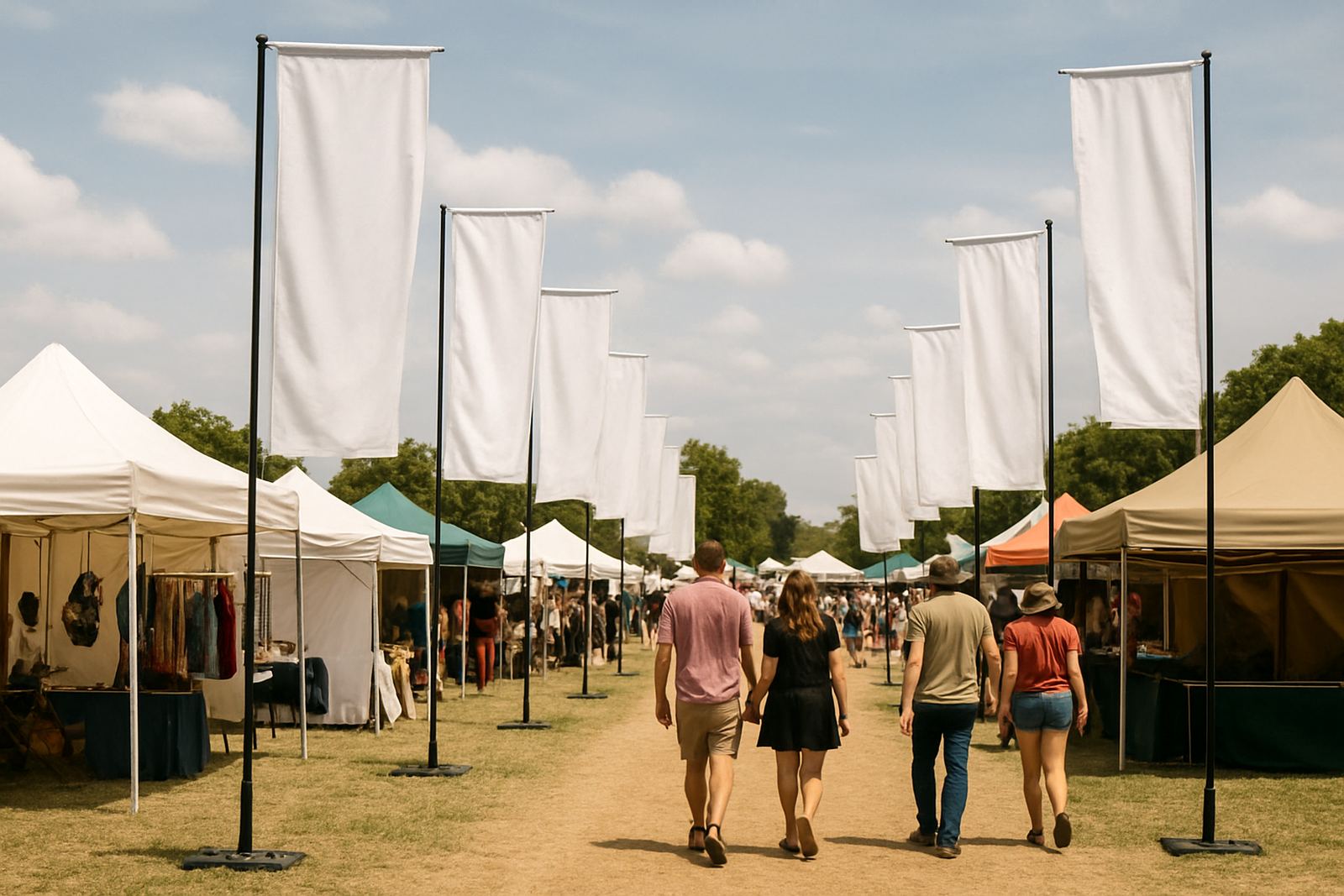
When a crowd is moving across grass, gravel or a tarred forecourt, signs on walls and poles can get lost. Flags sit higher, catch movement in the wind, and stay visible over heads and vehicles. That makes them useful for everything from ticket points to food courts, sponsor zones and first aid tents.
In Bloemfontein and surrounding towns, events often deal with bright sun, dust, and sudden wind. A good flag gives you a marker that people can spot from across a field, even when tents, cars and stages are blocking the view. It also works well for day and night events because the shape stands out better than a flat board in busy surroundings.
- Easy to spot from a distance
- Useful where foot traffic keeps changing direction
- Helps separate public, staff and service areas
- Can be reused for regular festivals and markets
Using flag placement to guide people, not just advertise
The best festival flag setup does two jobs at once. It shows your name or message and it quietly tells people where to go. At larger events, that means placing flags at decision points, not only at the entrance. A row of flags can show the route to parking, toilets, registration and shuttle stops.
In Mangaung, where many outdoor events are held on school grounds, sports fields or municipal open spaces, clear movement is important. Too many people gathering at one gate can slow everything down. Flags let you spread attention across several points, so the crowd does not bunch up in one spot.
- Place flags where people turn or pause
- Use repeated colour and wording for the same area
- Keep emergency access routes clear
- Match the flag message to the job, like entry, exit or queue control
The right flag format for Free State weather
Outdoor flags need to cope with wind, sun and repeated handling. In a dry Free State climate, dust can mark lower sections and strong gusts can test the base. Near parking areas, flags also need to handle exhaust, foot traffic and the occasional bump from a trolley or trailer.
For short events, a lightweight flag may be enough. For weekend festivals or recurring markets, it is better to use a stronger pole system and a base that matches the surface. Grass needs a different footing to paving, and sandbags or weighted bases can be useful where the ground is uneven. If the event runs into the evening, lighting should be checked early so the flag does not disappear after sunset.
- Choose a base that suits grass, paving or asphalt
- Use UV-stable print for longer outdoor life
- Check tie points before setup day
- Plan for wind direction on site, not just on paper
Design choices that help people read the message fast
Festival flags have only a few seconds to work. That means the wording must be short and the layout must be easy to read from a distance. One strong message is better than a crowded block of text. Large type, a simple logo and high contrast colours all help, especially when people are walking, carrying chairs or looking for their group.
We often advise event organisers to keep one purpose per flag. If one flag says entry and another says food court, people understand the site faster. When too many messages are packed together, the sign becomes a blur. A clean design also helps if the flags are being used in different towns from Bloemfontein to Welkom or Kroonstad, where the same event branding may need to work in slightly different settings.
For recurring events, it helps to keep the core design consistent and only change the details that matter, such as the zone name or sponsor line. That keeps the site easy to read year after year, and saves time when new flags are needed.
Local example: keeping a market day moving in Bloemfontein
At a weekend market in Bloemfontein, the organisers needed a clearer way to guide visitors between the main gate, food area and craft stalls. The entrance was busy, the parking area was spread out, and people kept asking where to queue for tickets. A set of well placed flags helped create visible markers at each decision point.
One group of flags pointed visitors to the entrance, another marked the food court, and a third identified the family seating area. The result was not just stronger branding. It made the site easier to walk through and reduced the stop-start movement that was building near the gate. Staff could then focus more on service and less on directing people every few minutes.
For event teams in Botshabelo, Thaba Nchu or even smaller towns like Brandfort and Winburg, this kind of setup can make a noticeable difference. It is a practical way to improve flow without changing the whole layout of the venue.
Planning, fixing and reusing flags after the event
Good festival flags should not be treated as one day items. If they are made properly, they can be stored, cleaned and used again for the next event. After the last crowd leaves, check the print, stitching, pole joints and base fittings. Small repairs done early are cheaper than replacing a full set later.
Before the next booking, walk the venue again and note where the flags worked and where they did not. A site survey helps you see the real movement pattern, not the one you expected. That is especially useful for outdoor events where the entrance changes, the crowd size grows, or the ground conditions are different from the previous year. A little planning can save a lot of stress on setup day.
- Store flags dry and flat or in tubes
- Inspect seams, clips and bases after each event
- Refurbish faded units before the next season
- Keep a spare set for high-traffic weekends