What construction signage has to do on site
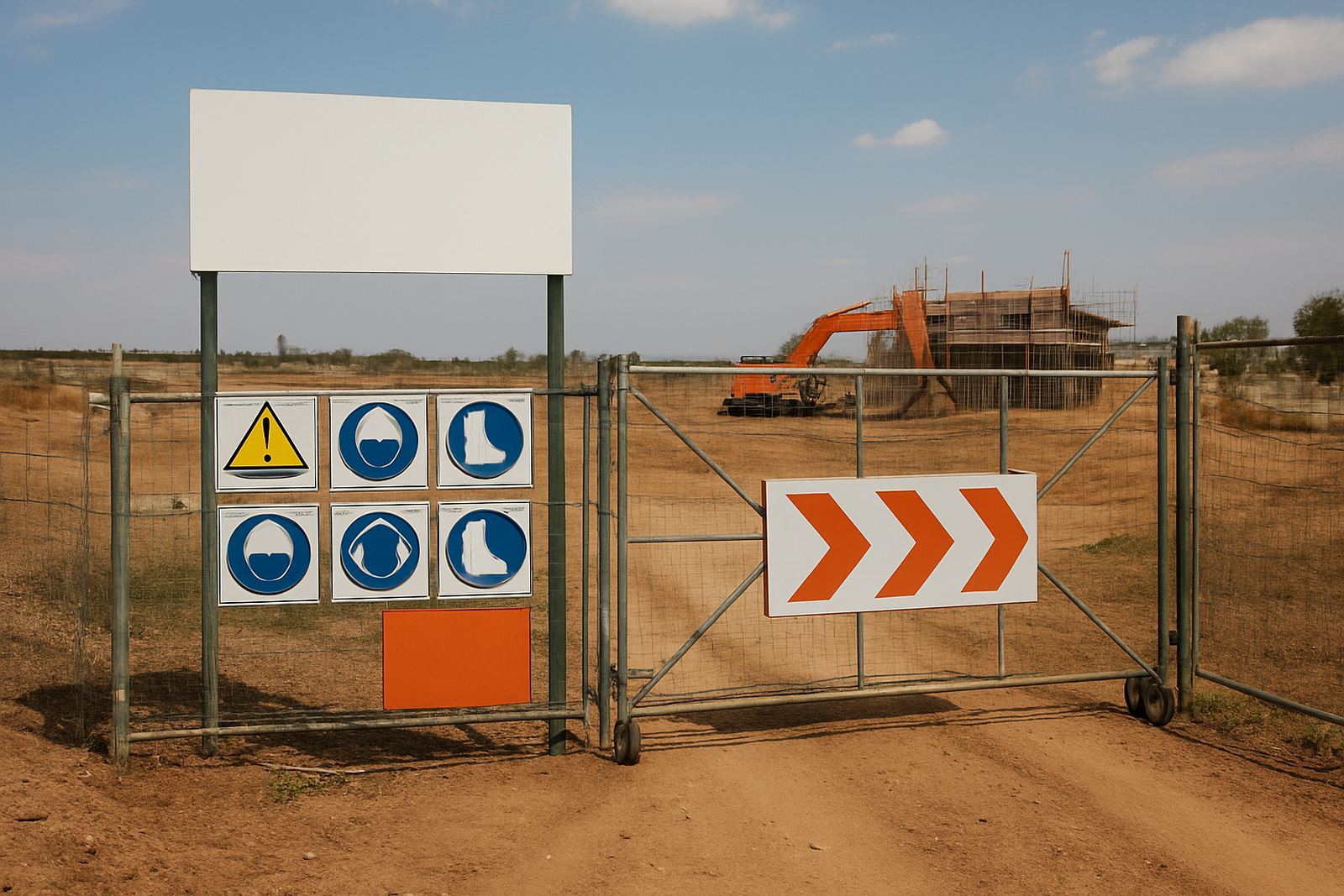
On an active building site, signage has a practical job. It tells delivery drivers where to stop, shows pedestrians where not to walk, and gives contractors clear instructions about PPE, access points and no-go areas. In Bloemfontein and across Mangaung, a good set of construction signs also helps you keep the site looking orderly when clients, inspectors or municipal officers arrive.
For temporary projects, the sign set usually needs to cope with dust, sun, wind and the odd knock from equipment. We make signs for short jobs and longer builds, from boundary boards and directional signs to safety notices and branded site boards. In the Free State, strong afternoon sun can fade poor print quickly, so material choice matters. If a site is near the main road or in a busy residential area, legibility from 10 to 30 metres is usually more useful than decorative detail.
- Site entrance boards for vehicles and visitors
- Danger and warning notices at active work zones
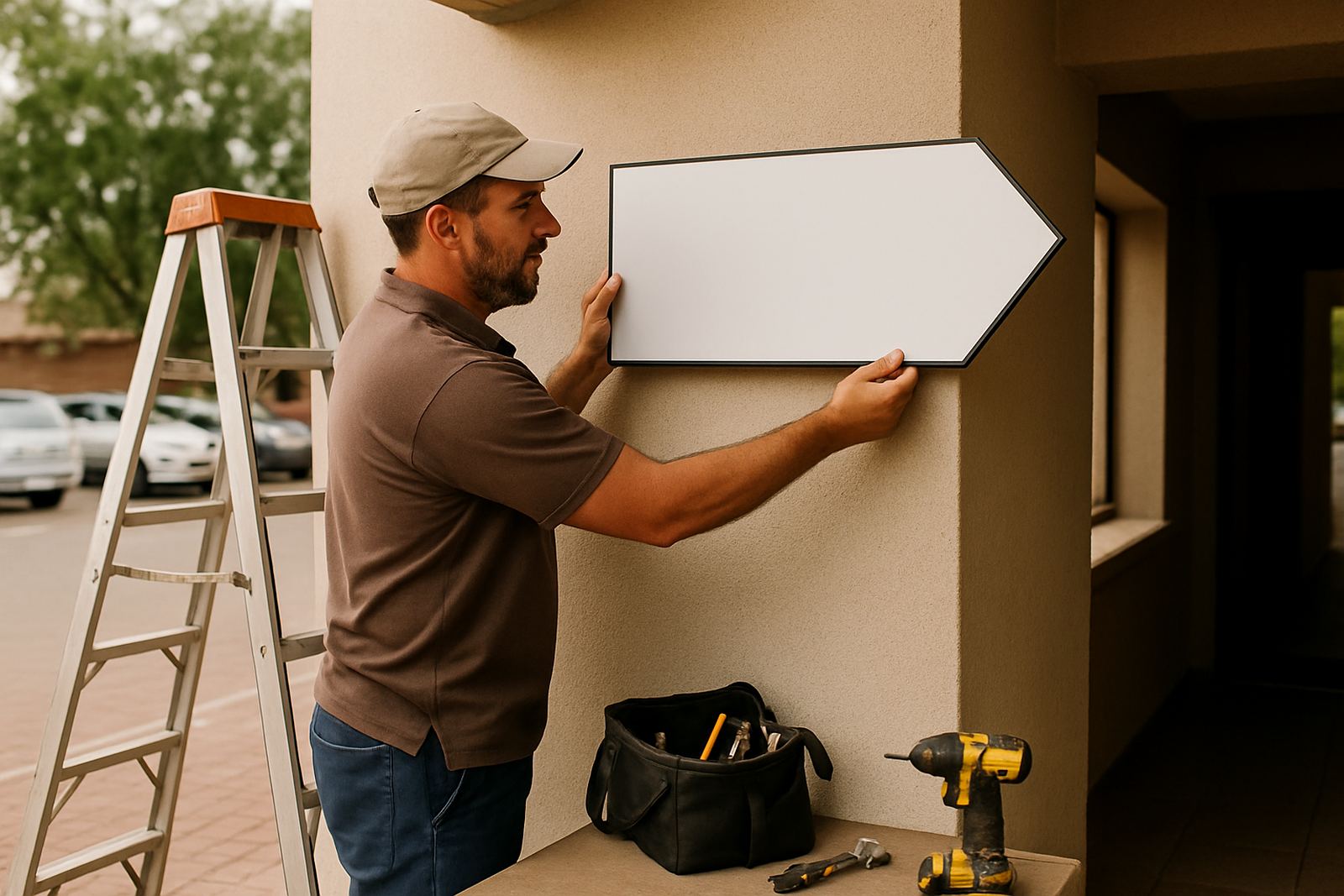
- Directional signs for access, exits and parking
- Contractor boards with project names and contact details
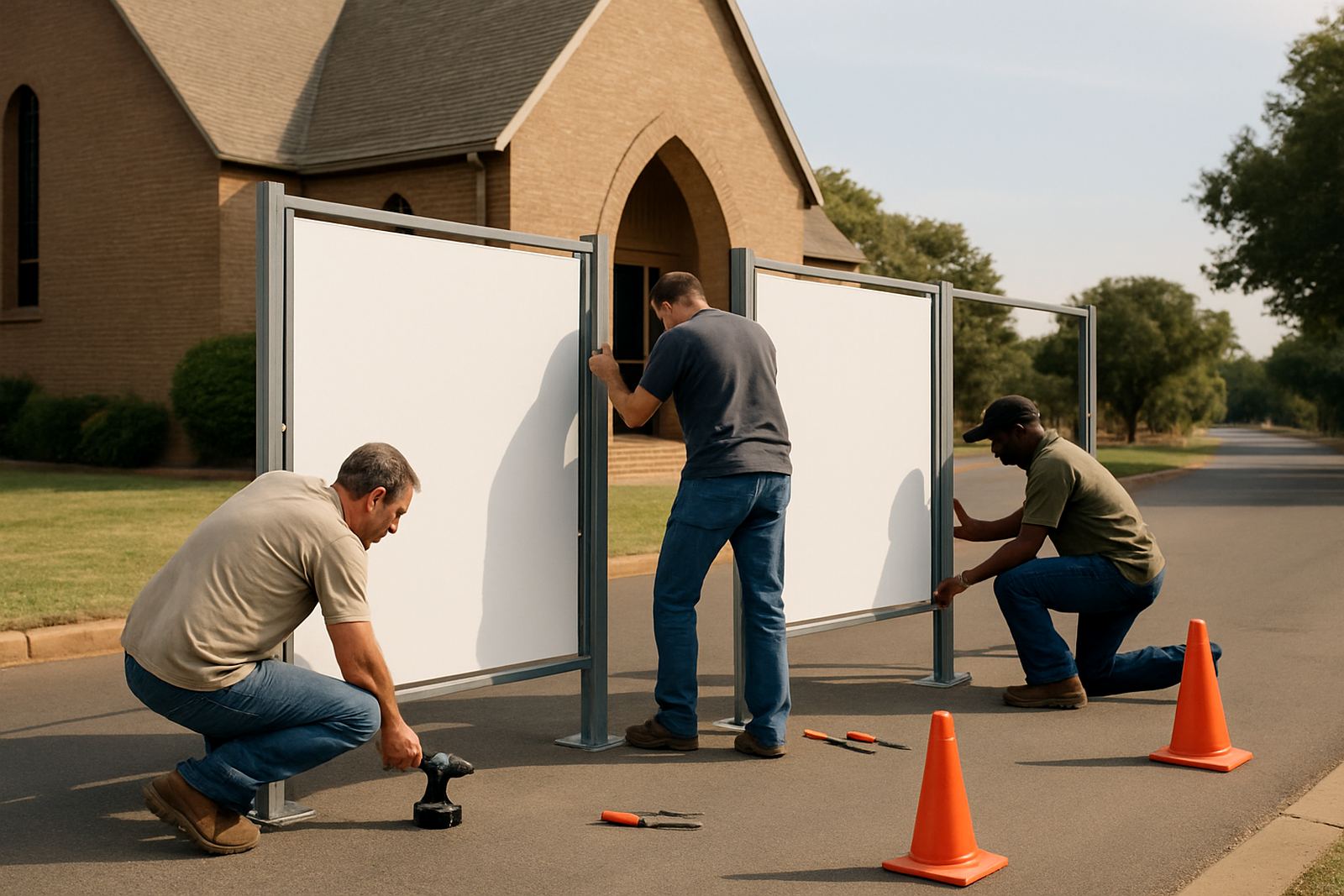
- Temporary branding for hoarding, gates and fences
Typical set for a building project
The right mix depends on whether the site is a small extension, a retail fit-out or a larger commercial development. Most clients start with a visible entrance board, then add safety and wayfinding signs as the job develops. For sites in Welkom, Kroonstad and Thaba Nchu, we often recommend a set that can be moved or replaced in sections, because access points tend to change as the build progresses.
A practical set might include corrugated plastic boards for short-term notices, aluminium composite panels for more durable entrance signs, vinyl graphics for gates and windows, and laminated decals for internal doors or glass panels. Where there is repeated movement of staff and visitors, floor arrows and hazard markings can save confusion. If the site has public access, reflective detail can help after dark or during load-shedding when visibility drops.
- Entrance board mounted on fence, wall or gantry
- PPE instruction signs at turnstiles or gate points
- Hazard boards for trenches, cranes, live services and wet concrete
- Floor decals for route control inside warehouses or retail builds
- Vehicle decals for contractor fleets and delivery vans
Planning layout before printing starts
Good construction signage starts with a site walk. Our team can look at the entry points, traffic flow, pedestrian routes and any areas where the public may come close to the work. Marius Jacobus van Rensburg and the team at our Hamilton base in Bloemfontein have handled sites where the board is seen from the street first, and others where the main issue is internal wayfinding for subcontractors.
For layout, keep the message simple. Large headings, clear arrows and short wording work best. Use one sign for one instruction if possible. When there are too many messages on one board, people stop reading it. Colour coding helps too: red for danger, blue for instructions, yellow for caution and green for access or safe routes. If the site has multiple entrances, number them. That small detail can save time when deliveries arrive early or when a municipal officer asks for a specific access point.
We also look at fixing methods. Fence wire, cable ties, screws, stand-offs and frame systems each suit different situations. On windy sites near open ground, a flimsy board will twist and crack, so the mounting method matters as much as the print. In humid coastal conditions this is even more important, but even inland dust and sudden rain can damage poor installation.
Common mistakes that cost time and money
Many site problems come from signage that was ordered too late or sized without checking the actual viewing distance. Another common mistake is using temporary signs for a job that runs for months. If the board has to stay outside through heat, dust and repeated handling, it needs a tougher finish. People also forget that a site changes. A sign that made sense during earthworks may be wrong once the structure goes up.
We often see signs blocked by parked vehicles, stacked material or new fencing. That means the board is technically there, but nobody can see it. The fix is simple: place signs where traffic naturally slows, and keep them high enough to stay visible. Another error is printing too much text. A visitor should understand the message in a few seconds, not after standing still in a loading bay. A small spelling slip or unclear arrow can be just as costly as a missing sign.
- Ordering one generic board for every section of the site
- Using fonts that are too thin for outdoor viewing
- Mounting signs where trucks or pallets block them
- Skipping reflective or laminated finishes for longer projects
- Leaving out access instructions for visitors and delivery drivers
Budget ranges for temporary and semi-permanent signs
Construction signage can be affordable if the sizes and materials are chosen properly. A basic temporary board for a small site may start from about R450 to R900 depending on size, print coverage and mounting. Larger entrance boards or multi-panel sets for commercial projects often range from R1 200 to R3 500. If you need a more durable board with laminate, standoff fittings or an aluminium composite face, the price can move higher.
For a fuller site package with hazard notices, directional boards, branded fence panels and vehicle graphics, budgets commonly sit between R3 500 and R12 000. Bigger developments, especially where several access points need to be signposted, can run beyond that. Refurbishment or debranding of old signs is usually more economical than replacing everything, if the substrate is still sound. We can also plan work in stages so the site does not carry a large upfront cost all at once.
For clients in Bloemfontein, Mangaung, Botshabelo, Kroonstad and beyond, the best value usually comes from getting the layout right the first time. That reduces reprints, avoids confusion on site and keeps the project moving. If you are working to municipal requirements or need a sign package for a tender file, it helps to allow a little extra in the budget for changes after the first site visit.
How Central Signs handles site work in the Free State
Central Signs makes and installs construction signage for active sites across Bloemfontein, Mangaung, Botshabelo, Thaba Nchu, Welkom and Kroonstad. Our process usually starts with an enquiry, then a site survey where needed, artwork setup and a clear plan for print, fabrication and installation. Zanele Dlamini handles graphic setup, Kagiso Moeketsi leads vehicle graphics where contractor fleets need branding, and Johan Smit takes care of installation work on site.
Lerato Molefe manages production, Thabo Ncgobo handles fabrication, and Annelie Botha coordinates client communication so the right boards arrive at the right time. That matters when a site is moving quickly and a delay in signage can hold up access or inspection. We also handle logo redraws, sign refurbishment, maintenance visits and debranding when a project changes hands. If the site needs temporary boards today and a more permanent set later, we can plan both phases. It is practical, not complicated, and it saves rework.
If you need construction signage for a site in Bloemfontein or the surrounding towns, use the enquiry form on our contact page and tell us the site size, access points and the signs you need first. We can then suggest materials and a budget that fits the job.