
What a lightbox cabinet actually does for your frontage
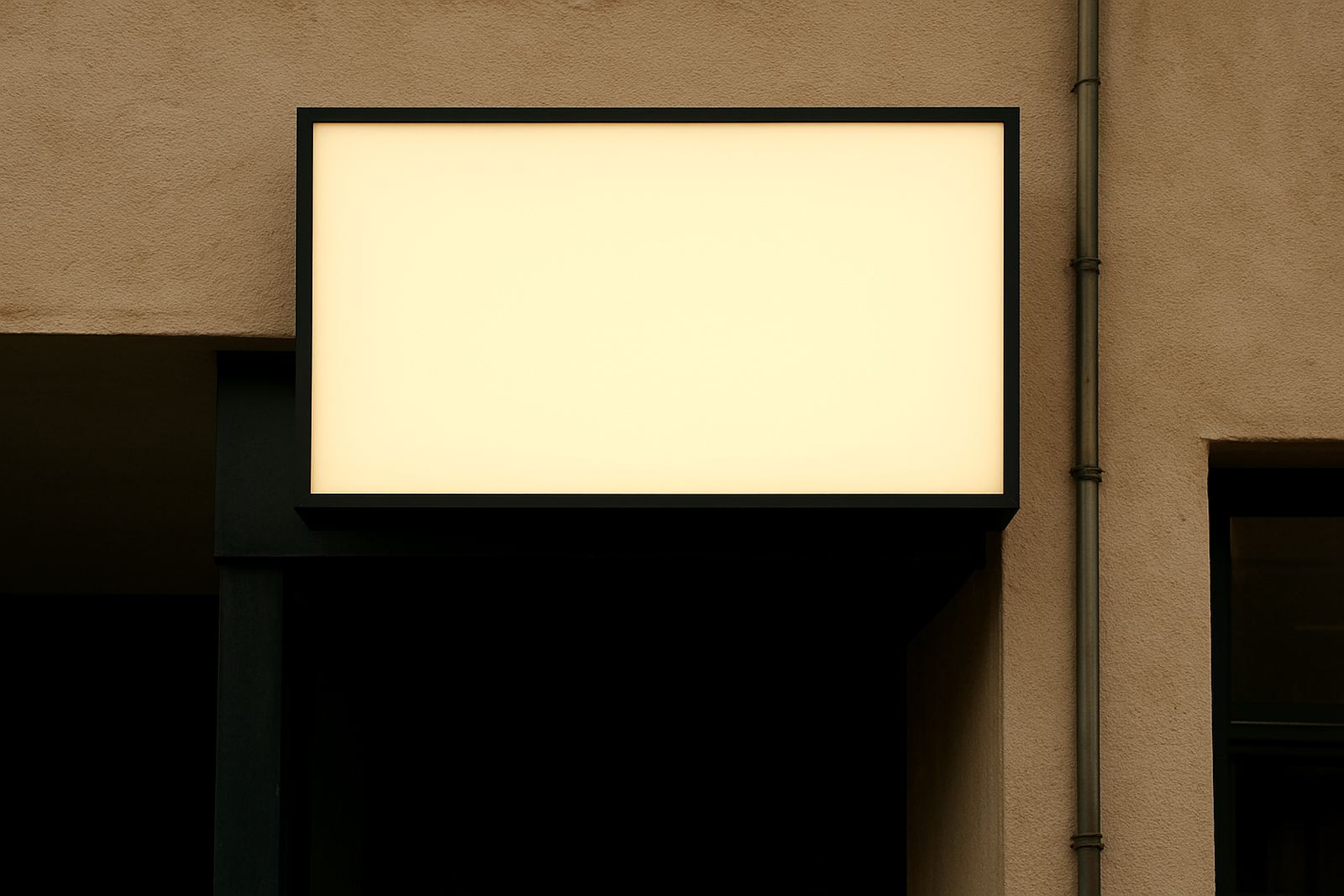
A lightbox sign cabinet is a enclosed sign frame with internal lighting and a translucent face, usually fitted to a shopfront, wall, pylon or fascia. It gives you clear visibility at night, but it also helps in daytime because the face stays clean, flat and easy to read from the road. For businesses in Bloemfontein, Mangaung, Botshabelo and Thaba Nchu, that matters when traffic moves quickly and drivers only have a few seconds to notice your name.
The cabinet can carry your logo, trading name, opening hours or a simple direction message. It is commonly used on retail stores, takeaways, pharmacies, medical rooms, office parks and service centres. If the site has limited space, a slim box with good proportions usually works better than a large sign that looks crowded or gets blocked by roof lines and poles.
- Good for night visibility and 24 hour trading areas
- Suitable for wall, fascia and freestanding applications
- Can be made in different depths, widths and lengths
- Works with single sided or double sided viewing needs
The key is to match the cabinet to the building, not the other way round. A sign that suits a busy street in Bloemfontein may need a different face size for a smaller frontage in Winburg or Brandfort.
How to choose the right size, depth and viewing distance
People often ask for the biggest sign possible, but size should start with viewing distance. If customers see you from 20 to 30 metres away, smaller lettering and a compact face may be fine. If the sign must be read from a main road, you need larger copy and cleaner layout. The cabinet depth also matters because it affects brightness and the amount of room available for the lighting gear.
As a guide, we look at frontage width, mounting height, passing speed and the amount of daylight the sign faces during the day. A shaded entrance needs different treatment from a full sun wall in central Bloemfontein. Dust, heat and winter cold also influence material choice, because some faces and seals last longer when the cabinet is exposed to strong temperature changes.
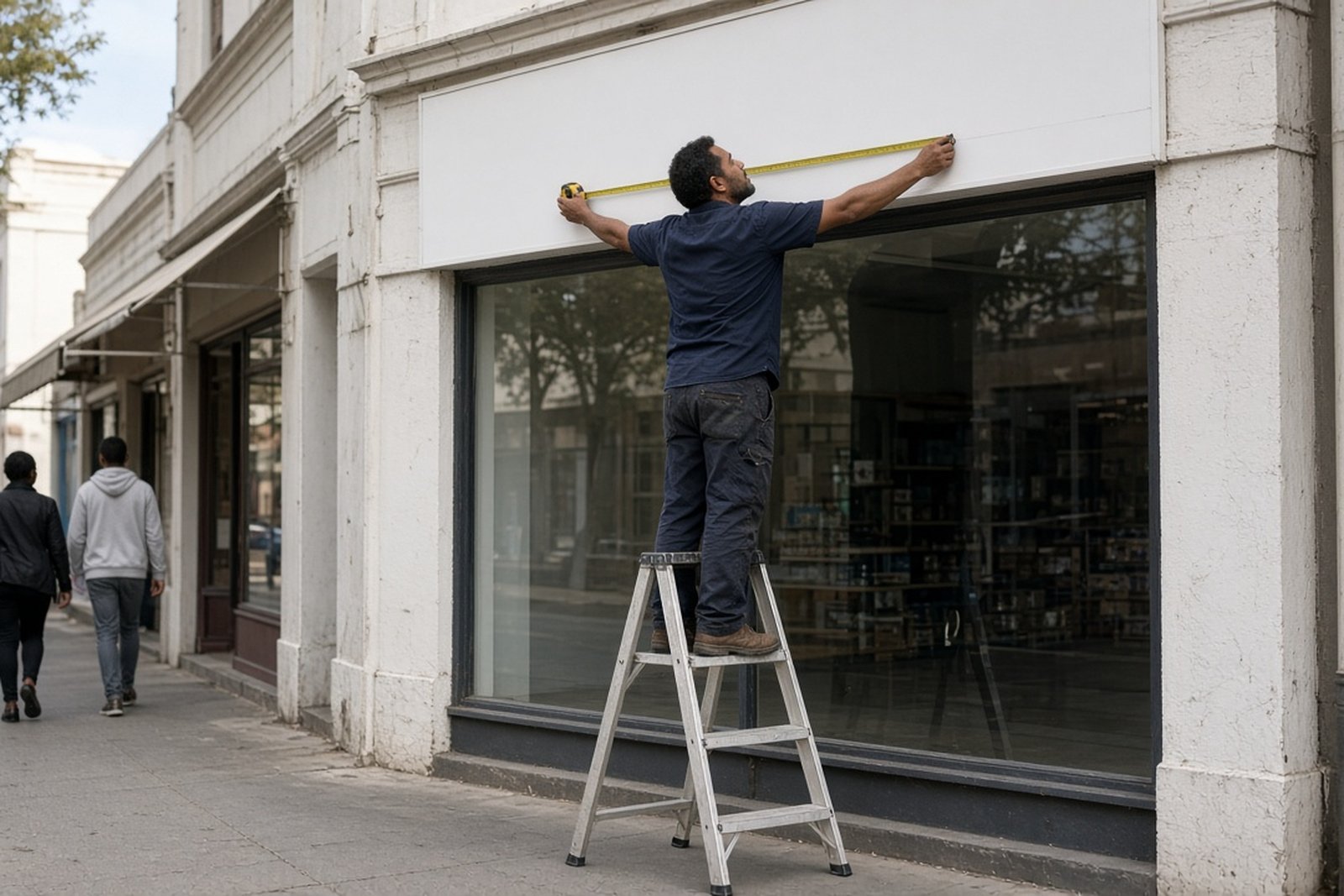
- Measure the available wall space first, then leave safe margins
- Keep wording short so the sign reads quickly
- Choose a depth that allows even light spread across the face
- Check whether the sign will be viewed head on or at an angle
If your site has municipal restrictions, landlord rules or shared signage panels, the final size may need adjustment. It is better to sort that out before fabrication than after the cabinet is already built.
What clients should ask about lighting, power and load-shedding
Modern lightbox cabinets usually use low energy lighting, which keeps running costs down and gives more even illumination than older tube setups. The exact arrangement depends on the size of the cabinet and how bright the face needs to be at night. In areas where load-shedding affects trading hours, many clients also ask how the sign will behave when power is interrupted. A lit cabinet without backup will go dark with the mains, so it is worth planning ahead.
We always check whether the site has safe access to power, where the control gear will sit, and how the cable route will be protected. On exposed walls or outdoor centres, weatherproofing matters just as much as brightness. Moisture, dust and vibration can shorten the life of poor fittings, especially near busy roads or in coastal humidity, even though Bloemfontein itself is fairly dry.
- Ask how much power the sign uses in normal trading hours
- Confirm if the cabinet can be linked to a timer or switch
- Check what happens during load-shedding or after a power trip
- Make sure cables and fittings are protected from weather and tampering
If the sign is part of a larger frontage package, the lighting should work with your window graphics, wall graphics and door branding so the whole site reads as one business after dark.
When a lightbox works better than vinyl only graphics
Vinyl graphics are often enough for doors, windows and interior branding, but a lightbox makes sense when you need stronger visibility from the road. It is especially useful where the building sits back from the street, where there are competing signs nearby, or where trading continues into the evening. A cabinet also looks tidy when the business wants one clear identity rather than several separate sign elements fighting for attention.
In central Bloemfontein, a restaurant facing evening traffic may use a lightbox above the entrance and window decals for special offers. In Kroonstad or Welkom, a fuel adjacent site or retail unit may need a bright fascia sign that can be read quickly from passing vehicles. For offices and service businesses, a lightbox can be paired with frosted window films, labels and directional floor graphics so visitors know exactly where to go.
There are times when a lightbox is not the best answer. If the frontage is very small, if the landlord limits projection, or if the site is in a heritage or sectional title area with strict visual rules, a simpler sign may be the safer choice. The right answer depends on the building, the road and the business hours.
How installation, maintenance and refurbishment affect value
A well made lightbox should be easy to service and safe to clean. That matters because even the best illuminated cabinet needs occasional attention. Dust build-up, faded faces, loose seals and aged lighting parts can make a good sign look tired long before the cabinet itself is worn out. Regular maintenance visits help prevent that and keep the sign bright enough for evening trade.
For businesses in Mangaung and nearby towns, refurbishment is often more cost effective than replacing the whole cabinet. A sign can be re-faced, re-lit, rebranded or adjusted after a name change, ownership change or new corporate look. If the structure is sound, there is usually no reason to start from scratch. Debranding is also useful when a tenant moves out and the site needs to be cleared neatly.
- Clean the face with mild soap and soft cloths only
- Check for water ingress after heavy rain or strong wind
- Inspect fixings if the sign is mounted high or on a pole
- Book maintenance before the sign starts dimming or flickering
A sign that is looked after can last for years. A neglected one becomes expensive because small faults spread into bigger repairs.
A practical Bloemfontein example for a busy shopfront
Consider a neighbourhood pharmacy in Hamilton, Bloemfontein, that needs clear visibility from an approaching street and from pedestrians after sunset. The shopfront has limited fascia height, a wide window line and a strong winter sun in the afternoons. In that case, the best solution may be a slim lightbox cabinet above the entrance, with clean lettering and enough internal brightness for evening visibility. The windows can carry the opening hours and service messages, while the door gets a simple safety or trading notice.
That same approach would change slightly for a business in Botshabelo or Thaba Nchu where viewing angles, frontage size and road distance differ. A single cabinet can still do the work, but the proportions and installation height should suit the site. This is why a site survey is worth doing before artwork setup and fabrication. It avoids guesswork and helps the final sign read well from the first day.
For Central Signs, the aim is always practical: make the sign fit the building, stay readable, and hold up to local conditions. Whether the job is for Bloemfontein, Mangaung, Welkom or Kroonstad, a good lightbox should look neat, stay visible and support the way the business trades.