Why the finish matters before you print a single label
Most people choose a label for the wording and the shape, then only notice the finish when the label is already in use. That is the part that decides how light hits the print, how easy it is to clean, and whether the details stay readable on a bottle, box, machine panel or product sleeve.
In Bloemfontein you get hard sun, dry wind and plenty of dust. In a retail window the same label may also face strong glare for most of the day. In a storeroom it may be handled with oily fingers. So the finish should match the job, not just the artwork.
At Central Signs, label work often starts with the surface first. Smooth plastic, powder-coated steel, glass, corrugated board and painted walls all behave differently. A finish that looks neat on one surface can turn harsh or dull on another, so it helps to choose with the final use in mind.
Gloss labels: strong colour and a brighter look
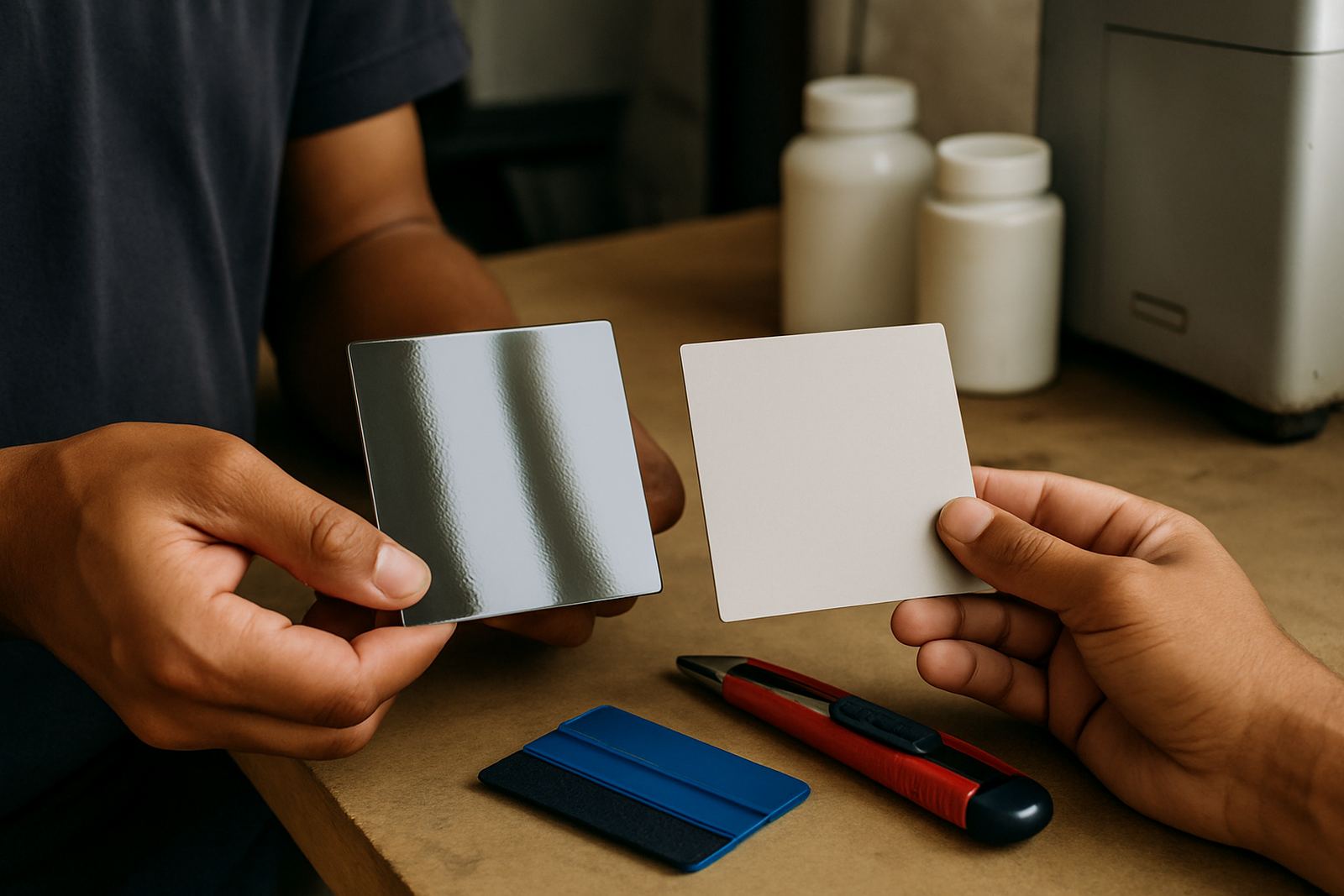
Gloss finishes give a reflective surface that makes colour look deeper and more vivid. If you want a label to stand out on a retail shelf, a glass jar, a clear container or a branded dispenser, gloss is usually the first option to consider. It gives a cleaner showroom look and helps small text look sharper at a quick glance.
That shine is useful, but it also means reflections. On a window facing the western sun in Mangaung, a gloss label may catch light at certain times of day and make fine text harder to read. If the label must be read from an angle or under changing light, test it before you commit to a full run.
Best uses for gloss:
- Retail labels where colour impact matters
- Product labels that need a polished finish
- Short term promotions and special offers
- Labels on smooth, clean surfaces
Gloss also tends to show fingerprints and scuffs a little more, so if the item is handled often, it may need a protective layer. That small extra step can make a big difference on labels that move through stockrooms, fridges or delivery trolleys every day.
Matte labels: less glare and easier reading
Matte finishes are chosen when readability comes first. They cut reflections, which makes them easier to read under bright office lights, on a vehicle panel in daylight, or on equipment that sits near a window. The surface feels softer and more understated, which suits technical labels, instructions and product information.
Matte can also hide minor marks better than gloss. If the label is going onto crates, archives, service boxes or shelving, this finish is practical because it does not shout for attention. It is a sensible choice for labels that must stay legible for months, maybe years, without looking shiny or overdone.
- Use matte for instruction labels and warning information
- Choose it for indoor equipment and storage systems
- It suits low-glare environments very well
- It is helpful where labels are read close up
One thing to watch is colour tone. Matte can make some colours look a touch flatter than gloss, so the artwork may need a small adjustment to keep enough contrast. That is normal and worth checking before print, especially where small text or icons are involved.
Protective finishes for handling, moisture and wear
When a label has to survive regular use, a protective finish is usually the difference between something that lasts and something that starts lifting or fading too soon. This can mean lamination, a clear overlayer or another protective treatment suited to the print method and surface.
For labels used on coolers, stock tubs, machinery, outdoor containers or promotional items that are wiped down often, protection matters. In coastal conditions near the Free State routes toward the eastern side of the province, moisture and dust can also affect adhesion if the surface is not prepared properly. A finish only works well when the base material and installation are done correctly.
Useful reasons to add protection:
- The label will be cleaned often
- It will sit near sun, heat or condensation
- The item is handled daily by staff or customers
- You want the print to resist scuffing and light abrasion
A protective layer is not only for outdoor use. A label on a warehouse shelf or a delivery crate may take more abuse than one on a shop counter. In those cases, the extra cost is usually cheaper than replacing faded or damaged labels every few weeks.
Matching finish to the surface and the job
The right choice depends on where the label will sit and how people will use it. A glossy promotional sticker on a window is not the same as a matte asset label on a machine. The finish should support the message, not fight against it.
Here is a simple way to think about it: if the label needs to attract attention, gloss can help. If it needs to be read quickly and often, matte is usually safer. If it will be cleaned, touched or exposed to weather, add protection. That is the practical formula we use on many label jobs for shops, workshops and offices across Bloemfontein and the wider Mangaung area.
It also helps to think about the surface colour. Light labels on dark surfaces are easier to read if the finish does not reflect too much. Dark labels on pale surfaces can benefit from a finish that reduces glare. The wrong finish can make a neat design look off centre or washed out, even when the print itself is good.
A Bloemfontein example from a busy front counter
Say a local takeaway in Hamilton needs labels for sealed containers, price stickers for packaged meals and a small window graphic for daily specials. The container labels need to stay readable in the fridge and during delivery, so a matte or lightly protected finish makes sense. The window graphic can be gloss because the colour needs to catch the eye from the pavement.
If the same business also uses labels on cleaning tubs, shelving and stock boxes, then one finish may not suit all of them. That is where practical advice matters. One label can be decorative, another can be purely functional, and a third may need extra protection because it is wiped down every shift. It is best to decide each set by use, not by habit.
In many cases, a small sample set is enough to spot problems before full production. You can see whether the text reads well in sun, whether the colours stay true, and whether the surface feels right when handled. That saves time and avoids reprints later on.
What to check before approving your label finish
Before you give the go-ahead, ask a few direct questions. What surface will the label go on? Will it face sun, moisture or frequent cleaning? Does it need to look premium, or just stay clear and durable? These answers guide the finish better than guessing ever will.
Keep this short checklist in mind:
- Readability at arm’s length and up close
- Exposure to sun, dust or damp conditions
- How often the label will be touched
- Whether the finish must match other branded items
- Any cleaning chemicals or rough handling involved
Once these points are clear, the choice between gloss, matte and protective finishing becomes much simpler. You are no longer choosing only a look, you are choosing how the label should perform in real use. That is the part that matters most, especially for businesses that need labels to work day after day without fuss.