Why aisle marking matters in busy storage areas
In a warehouse, every metre counts. If the aisles are not clearly marked, stock gets parked in the wrong place, emergency exits become harder to see and staff spend too much time working out where to go next. Good aisle marking gives each zone a job: one route for forklifts, one for foot traffic, one for picking, and another for overflow or returns.
That matters even more in places like Bloemfontein and Mangaung where many warehouses serve retail, agriculture and light manufacturing. Dust, bright midday glare and load-shedding can all make the floor harder to read. A clear marking plan reduces near misses and keeps the team moving with less stopping and starting.
- Clear direction for forklifts and pallet jacks
- Safer routes for staff on foot
- Better use of storage space
- Faster stock counts and dispatch
- Cleaner compliance with exit and fire access rules
Floor markings that guide movement without slowing work
Floor marking should suit the work being done. In some warehouses, painted lines are best. In others, heavy-duty vinyl or laminated graphics make more sense, especially where there is regular traffic and the floor needs to stay readable after cleaning. The right choice depends on the surface, tyre wear, moisture and how often the area gets scrubbed or swept.
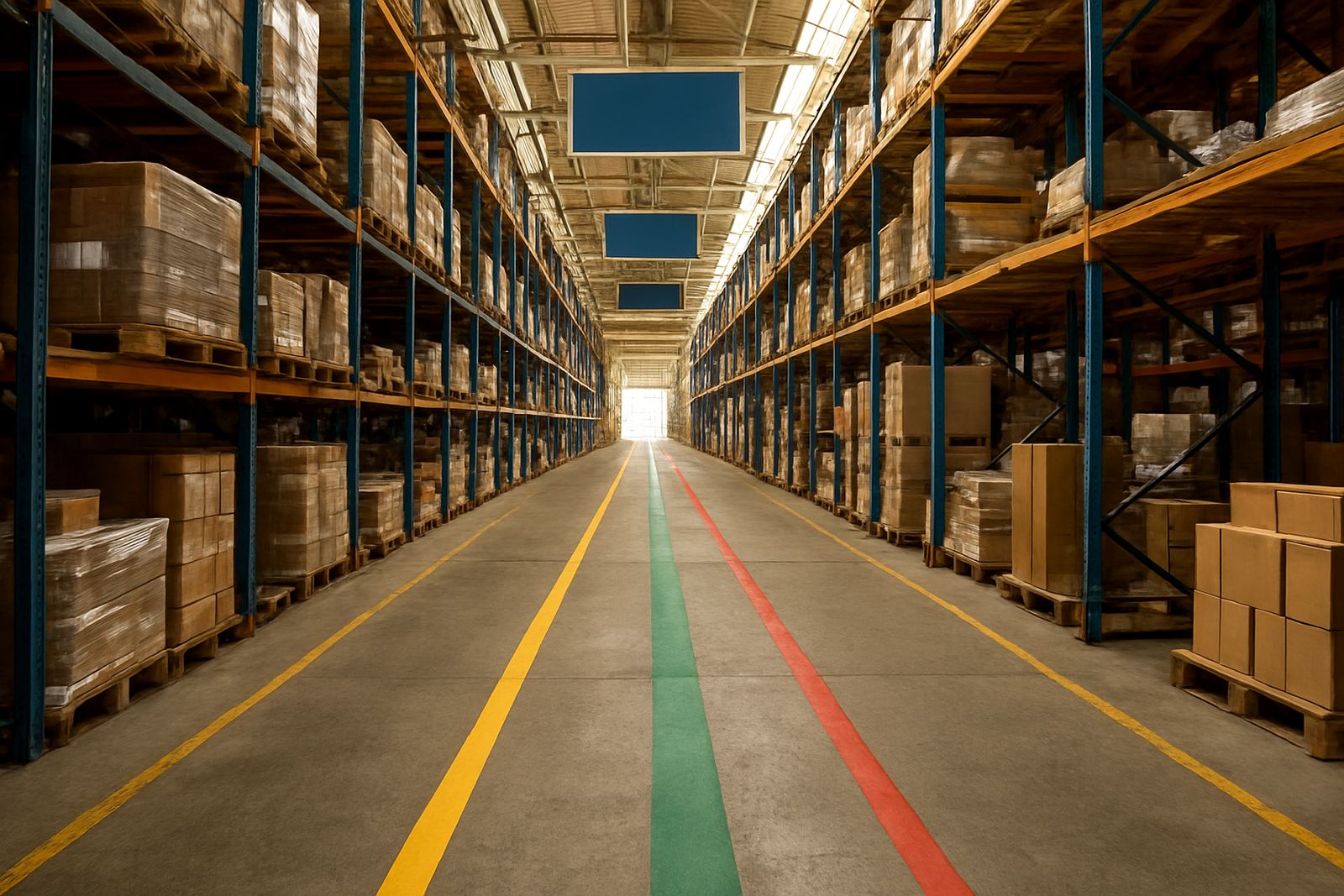
For aisle marking, the line colour and width need to be easy to read from a distance. Yellow is often used for traffic lanes, while other colours can separate zones for inspection, staging or hazards. If the floor is rough or old, a better surface prep may be needed first so the marking stays put. A quick fix that lifts in three weeks is false economy.
- Traffic lanes for forklifts and trolleys
- Pedestrian walkways with clear edge lines
- Staging bays for incoming and outgoing goods
- Hazard areas around doors, machines and drop zones
- Numbered or lettered bays for faster location checks
Overhead signs do the job when racks rise high
Floor marking is only half the story. In taller warehouses, overhead signs and hanging labels help workers find aisles, sections and rack rows before they reach the floor space. This is useful where shelving blocks sight lines or where the team works under time pressure during loading and despatch.
We often find that overhead marking is what stops the last bit of confusion. Aisle numbers on uprights, direction signs at cross passages and large section identifiers above the rack end can save many small delays during the day. For depots that run after dark or during power cuts, reflective or high-contrast finishes help people read the signs with less strain.
- Large aisle numbers visible from the forklift seat
- Rack end signs for product families or zones
- Directional arrows at junctions and crossings
- Suspended signs for long aisles and wide bays
A local Bloemfontein example from warehouse floor to dispatch
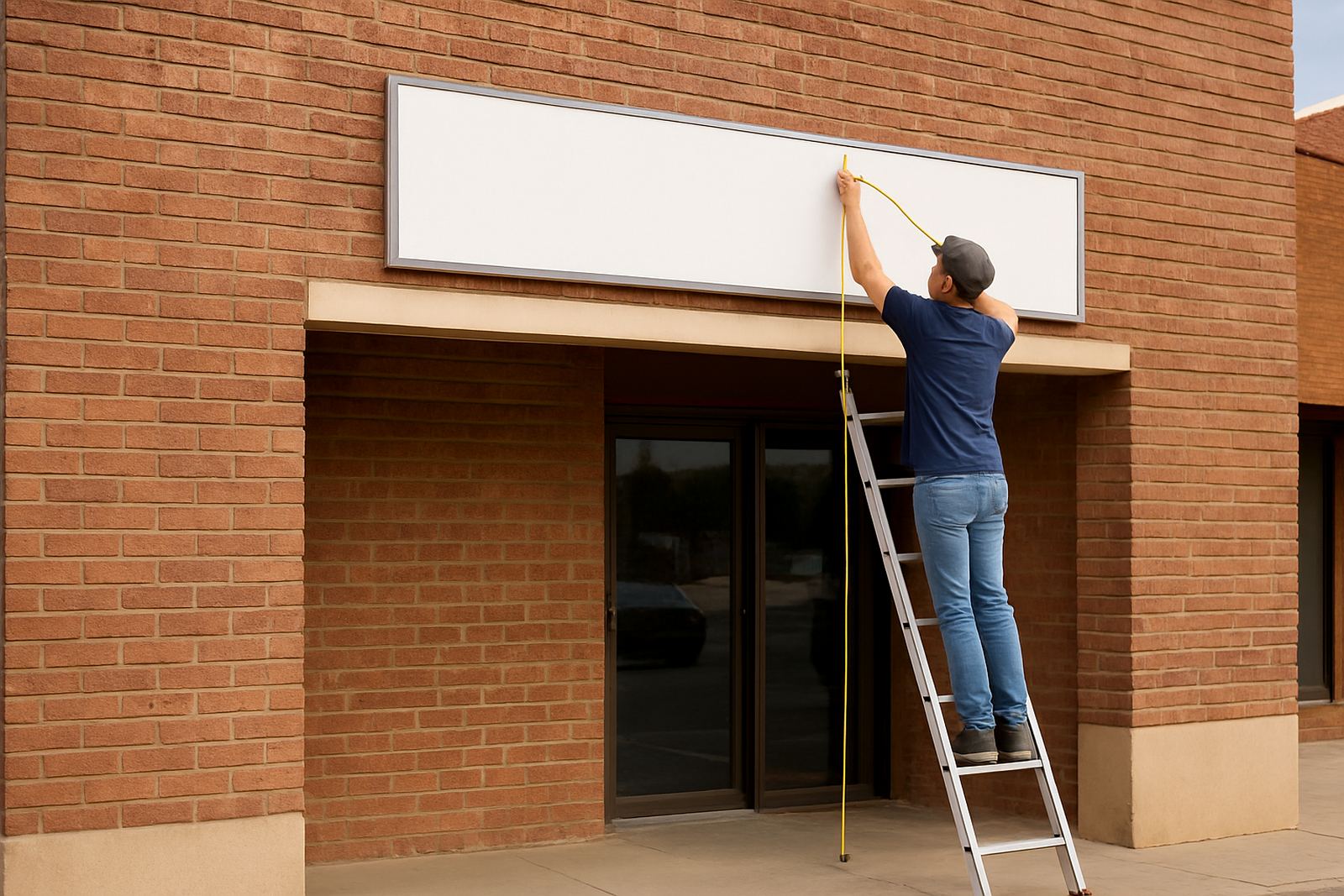
A medium-sized distribution warehouse in Hamilton, Bloemfontein may have mixed traffic, with staff on foot near receiving, pallet movement through the main aisles and regular vehicle access at the loading area. In that kind of setting, we would usually start with a site survey, then map the travel paths, staging points and emergency routes before any marking is installed.
For a warehouse like that, the practical approach is to mark the forklift lanes first, then add pedestrian crossings at controlled points and number the aisles so stock can be found faster. If the site handles deliveries to Mangaung, Botshabelo or Thaba Nchu, simple bay labels and clear direction arrows can cut confusion for drivers who are not on site every day. It is basic work, but it saves time right away.
One thing that is often missed is the effect of dust and concrete wear. A marking that looks fine on day one can fade quickly if the floor is not prepared properly. That is why surface cleaning, adhesion checks and the right finish matter just as much as the layout itself.
Materials and finishes that suit warehouse conditions
Warehouses are not gentle spaces. Forklift tyres, trolley wheels, pallet drag, cleaning chemicals and constant foot traffic all put pressure on markings. The material has to suit the job and the floor has to be ready before installation. If the marking is too thin, it wears through. If the adhesive is wrong, edges lift. If the finish is too glossy, glare can become a problem under strong light.
In Bloemfontein and surrounding towns like Welkom and Kroonstad, temperature swings can also affect how products bond to floors and walls. For some jobs, a laminated print gives the best balance between visibility and durability. For others, cut vinyl or painted layout lines are more suitable. The right answer depends on how the space is used, not on guesswork.
- Cut vinyl for clean aisle edges and labels
- Laminated graphics for longer wear in busy lanes
- Colour coding for departments, zones or hazard points
- Anti-slip options for walkways and directional graphics
How to keep warehouse marking useful after installation
Good marking is not only about the install day. It needs a maintenance plan so it still does the job six months later. That may mean regular cleaning, touch-up visits, replacing worn labels and checking that the aisle numbers still match the stored goods. If a warehouse changes layout often, the marking should be easy to update without causing a full shutdown.
We also recommend reviewing markings after any change to storage racking, fire equipment placement or dispatch flow. If a route gets blocked or a new machine is added, the marking needs to follow the new reality. A sign that points people the wrong way is worse than no sign at all.
- Inspect high-wear lanes and crossings monthly
- Replace faded labels before they become hard to read
- Update routes after layout changes or rack moves
- Keep emergency access lines visible at all times
The practical way Central Signs handles aisle marking projects
Central Signs works from Hamilton in Bloemfontein and serves warehouses and storage sites across Mangaung, Botshabelo, Thaba Nchu, Welkom and Kroonstad. Our process starts with a site survey, then artwork setup, layout checks and sign fabrication or print production as needed. For warehouse aisle marking, that can include floor graphics, wall labels, overhead signs and directional markers for doors and loading areas.
The team includes people who handle production, design, vehicle application and installation, so the work stays coordinated from first measure to final fix. If a site needs debranding, maintenance visits or a full refresh of old markings, that can be planned too. The aim is simple: make the space easier to read, easier to move through and safer for the people working in it. When the markings are right, the warehouse runs calmer and faster, even on a busy Monday morning.